Investors: 6 Question Checklist and Evibe for Hedged or Unhedged ETFs
A decision-first primer for investors: a 6-question checklist for hedged or unhedged ETFs, then track real returns privately with Evibe’s Apple-native app.
Investors: 6 Question Checklist and Evibe for Hedged or Unhedged ETFs

There is no universal best answer here: hedged ETFs generally suit investors who need predictable, near-term returns or reliable income, since they strip out currency swings. Unhedged ETFs generally suit long-term, cost-sensitive investors, since currency effects tend to average out but the roll costs of hedging don't. The trade-off is simple: pay for predictability, or accept some noise to keep costs down.
TL;DR:
- Hedged ETFs reduce volatility and protect income by neutralizing currency effects, which benefits short-term or near-retirement investors relying on predictable cash flow.
- The cost of hedging depends on interest-rate differentials and roll frequency, often leading to higher expenses and potential taxable distributions over multi-year periods.
- Unhedged ETFs usually have lower fees, but currency fluctuations can erode returns, especially during periods of significant exchange rate moves.
- In market stress, unhedged assets may outperform hedged ones if safe-haven currencies strengthen unexpectedly, reversing typical advantages.
- Comparing actual five-year total returns of hedged and unhedged versions reveals the real-world impact of currency effects beyond expense ratios.
Table of Contents
- Hedged vs. Unhedged ETFs: What the Terms Actually Mean
- How Currency Hedging Actually Works
- Pros and Cons of Hedged vs. Unhedged ETFs
- Which Investors Tend to Prefer Hedged or Unhedged ETFs
- Costs, Taxes, and Tracking Error: What Eats Returns in Hedged ETFs
- When Hedges Paid Off, and When They Backfired
- How to Choose: A Practical Decision Checklist
- Why Watching Real Dollars Beats Theorizing About FX
- Track Hedged and Unhedged ETFs Side by Side in Real Dollars
- Sources
Hedged vs. Unhedged ETFs: What the Terms Actually Mean
A hedged ETF uses currency forwards to neutralize the effect of exchange-rate movements on a share class, so your return tracks the foreign asset's local-currency performance rather than what the dollar did against the yen or euro. An unhedged ETF does no such thing. You get the underlying asset's return plus or minus whatever currency did during your holding period.
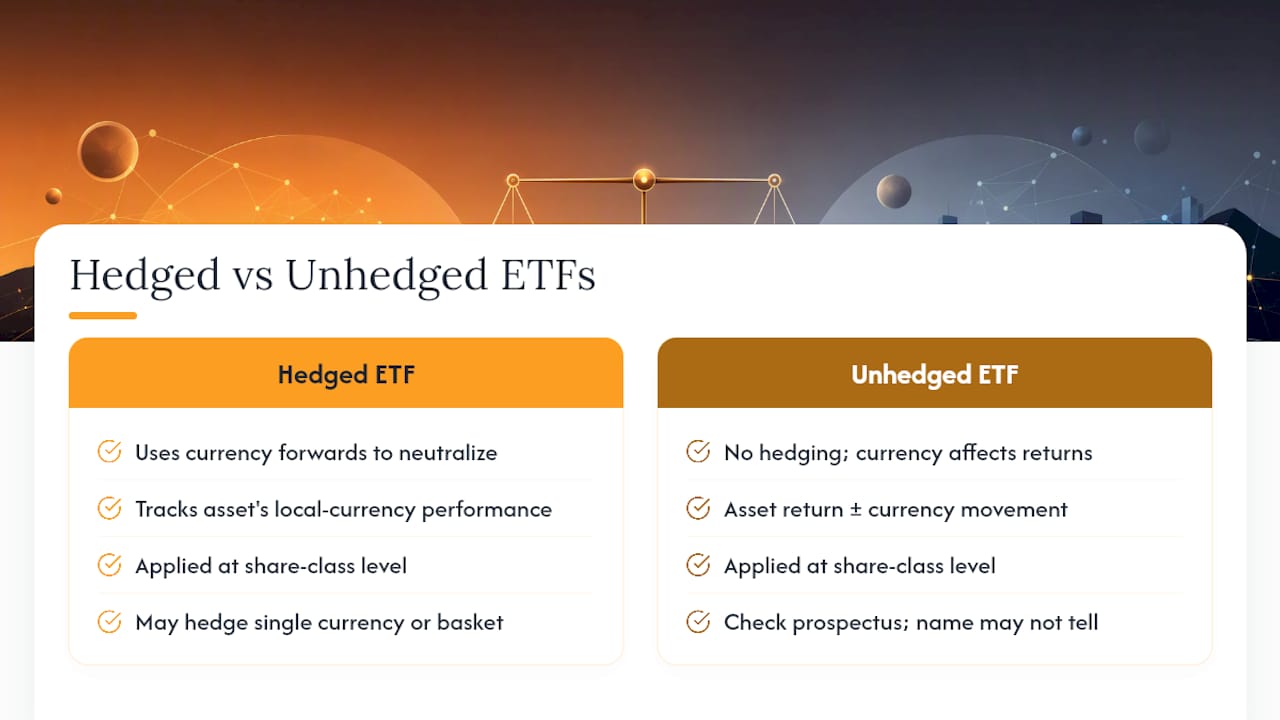
This distinction usually happens at the share-class level, not the fund level. Many providers issue both a hedged and unhedged version of the same underlying fund, sometimes hedging against a single currency and sometimes against a basket. Check the prospectus. The name alone doesn't always tell you which basis applies.
How Currency Hedging Actually Works
Hedging isn't magic. It's a mechanical process built on FX forward contracts, agreements to exchange currency at a set rate on a future date. Funds typically roll these contracts monthly, closing expiring positions and opening new ones to maintain the hedge ratio.
That rolling isn't free, and it isn't neutral. Its cost or benefit depends on the cost of carry, the interest-rate differential between the two currencies involved. When the foreign interest rate is higher than the domestic one, hedging tends to add a modest return. When it's lower, hedging tends to subtract from returns. Roll frequency matters too: more frequent rolling reduces tracking error but raises transaction costs.
- Forwards are settled and re-established on a rolling schedule, usually monthly.
- The hedge ratio (how much exposure is offset) is rarely a perfect 100%, which creates basis risk.
- Cost of carry can flip from a tailwind to a headwind as rate differentials shift.
Interest-rate differentials, not fund manager skill, are usually the single biggest driver of whether hedging helps or hurts your return in any given year.
Pros and Cons of Hedged vs. Unhedged ETFs
Weighing this comes down to what you're optimizing for: smoother returns or lower cost.
Hedged ETF advantages:
- Lower currency-driven volatility, which matters if you're drawing income or nearing a spending goal.
- Dividends and interest paid in foreign currency retain more of their value once converted back, since FX erosion is largely removed from the equation.
- More predictable short-term performance relative to the local-currency benchmark.
Hedged ETF drawbacks:
- Higher expense ratios to cover the forward contracts and rolling activity.
- Can underperform for multi-year stretches if rate differentials move against the hedge.
- Frequent contract rolls can generate capital gains distributions in taxable accounts.
Unhedged ETF advantages and risks: Unhedged funds cost less to run, occasionally benefit from favorable currency moves, and involve simpler mechanics with nothing to roll or rebalance. The downside is currency erosion risk, which can meaningfully dent returns over short- to medium-term windows, especially for income investors converting foreign dividends back to dollars.
Which Investors Tend to Prefer Hedged or Unhedged ETFs
Your time horizon and cash-flow needs usually decide this for you.
- Income and near-retirement investors typically lean hedged. Retained dividends in local currency avoid FX erosion when converted, which protects the cash flow you're relying on.
- Long-term growth investors typically lean unhedged. Lower fees compound in your favor, and currency effects tend to mean-revert over long stretches, meaning hedged and unhedged returns often converge over multi-decade horizons.
- Account type matters. Hedged ETFs' periodic capital gains distributions are more of a drag in a taxable brokerage account than inside a tax-sheltered retirement account.
- Behavior matters too. Sharp currency swings tend to spook unhedged investors into badly timed rebalancing. If you know you'll panic-sell during a weak-dollar stretch, that's a real argument for hedging, regardless of the math.
Costs, Taxes, and Tracking Error: What Eats Returns in Hedged ETFs
Three channels quietly erode hedged ETF returns, and none of them show up clearly until you add them up.
- Expense ratios run measurably higher on hedged share classes than their unhedged twins, since someone has to manage the forward book.
- Roll and transaction costs compound month after month, and they don't disappear in flat markets. They're a fixed drag regardless of how the trade works out.
- Capital gains distributions from forward contract rolls can surprise taxable-account holders with a tax bill they didn't generate through their own trading.
Hedging generally reduces currency-driven tracking error against a local-currency benchmark, which is the point. But that reduction comes at a price, and Morningstar's research is blunt that hedging can underperform for years if rate differentials move the wrong way.
Pro Tip: Pull up a hedged and unhedged version of the same fund side by side and compare their five-year total returns, not just their expense ratios. The gap tells you more about real-world cost of carry than the fact sheet ever will.
When Hedges Paid Off, and When They Backfired
Timing decides everything here. During 2023, sharp yen depreciation against the dollar produced large divergence between hedged and unhedged Japan equity exposures, with hedged share classes capturing local-market gains that unhedged investors partly gave back to the currency move.
Crisis periods flip the script. Safe-haven currencies like the dollar and yen tend to strengthen during market stress, which can make unhedged exposure to US or Japanese assets perform better than a hedged version during a selloff. Index-provider research shows this correlation behavior varies by episode, which is exactly why a single historical example should never be treated as a permanent rule.
How to Choose: A Practical Decision Checklist
Work through these questions in order before picking a share class:
- What's your objective: income now or growth over decades?
- What's your time horizon: under five years, or fifteen-plus?
- Do you need FX-neutral cash flow, or can you absorb some swings?
- What's the expense ratio gap between the hedged and unhedged versions?
- How is the hedge implemented, and how often does it roll?
- Is this going in a taxable account or a tax-sheltered one?
Once you've answered those, compare total-cost drag over a realistic holding period, run a rough scenario for a 10% currency move in each direction, and read the fund's actual prospectus rather than relying on the ticker's name.
Pro Tip: Before committing real money, log both the hedged and unhedged versions in a portfolio tracking tool or a simple paper portfolio for a few months. Watching the real-dollar gap accumulate teaches you more than any spreadsheet model.
Why Watching Real Dollars Beats Theorizing About FX
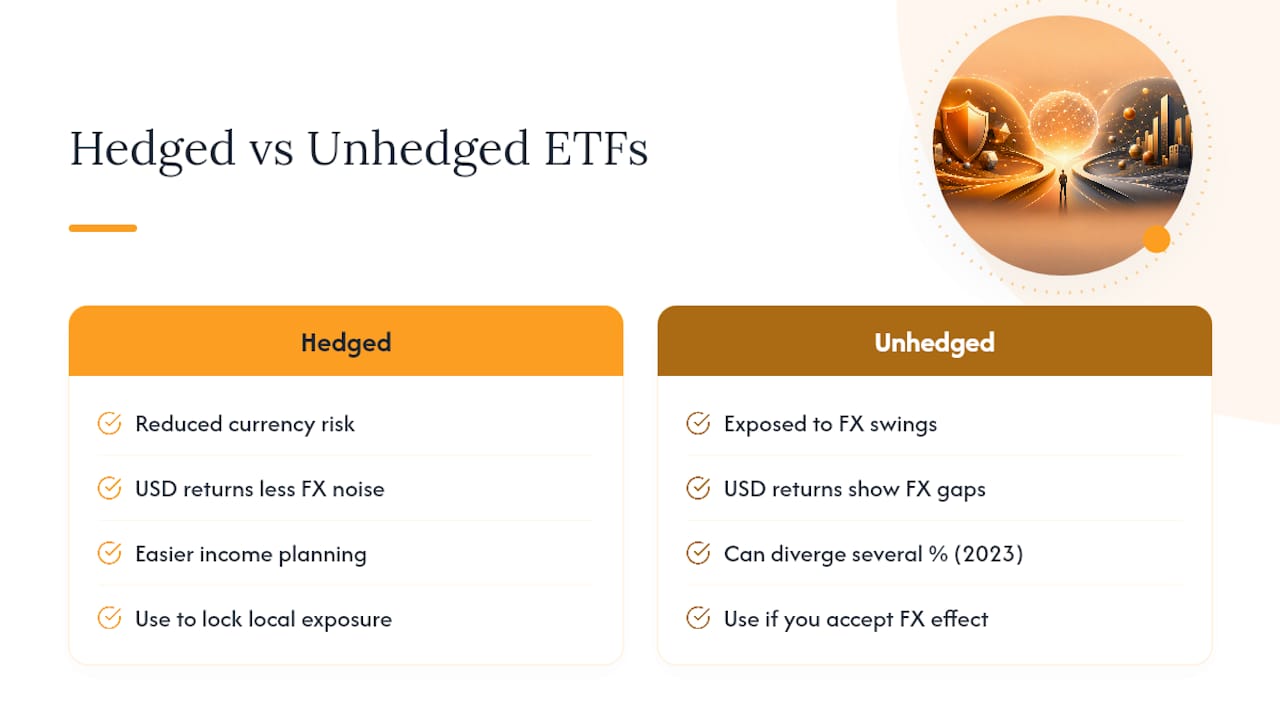
Most guides stop at the mechanics. What gets underweighted is how disorienting it feels to watch two nearly identical funds diverge by several percentage points over a year, purely because of a currency you don't otherwise think about. That's not a hypothetical. It happened to Japan-focused investors in 2023.
The fix isn't more theory. It's tracking your actual hedged and unhedged holdings against each other in real dollar terms, not abstract benchmark comparisons. Evibe's ETF-specific analytics and multi-currency support exist partly for this reason: they let you see the FX-driven gap between two similar funds as it actually happens, rather than reconstructing it after the fact from a fact sheet. Pairing that with a clear read on your own income needs, using something like an ETF dividend income framework, turns an abstract debate into a decision grounded in your own numbers.
— Vincent
Track Hedged and Unhedged ETFs Side by Side in Real Dollars
Reading about cost of carry and tracking error only gets you so far. Evibe is built for the moment you actually own both a hedged and unhedged position and want to see, in real dollars, which one is winning and why.
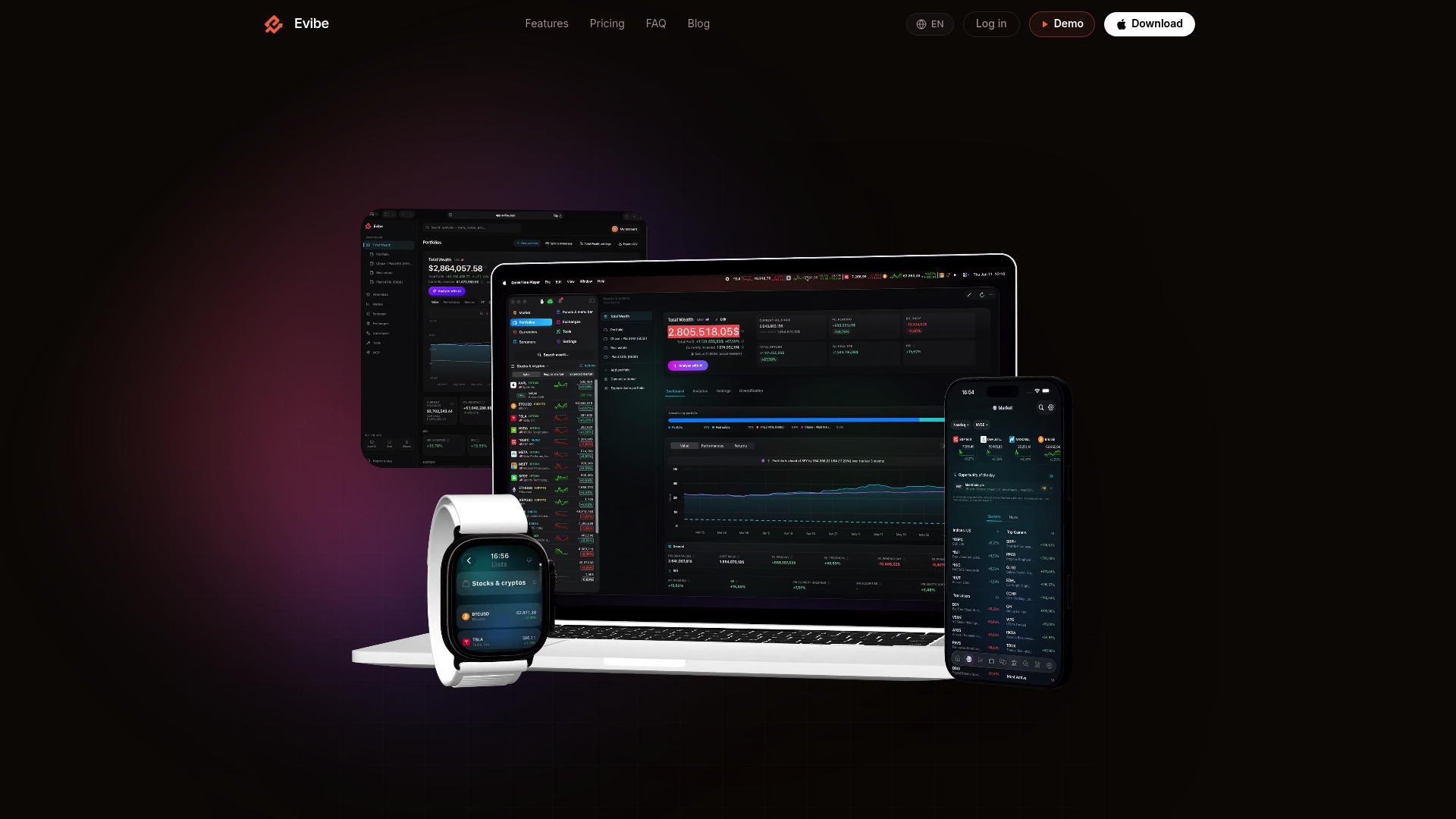
With multi-currency support and historical FX rates, Evibe shows you exactly how much of your return came from the underlying asset and how much came from currency movement. A portfolio tracking app with ETF analytics can track hedged and unhedged share classes side by side and dividend tracking to flag how much of your income is being preserved or eroded by FX. If you're weighing a switch or just want clarity on what you already hold, start free and check your ETF portfolio tracker to see the real numbers behind your holdings.
This article is general information, not a substitute for advice from a qualified financial advisor. Consult a qualified financial professional about your own circumstances before acting on anything here.
Sources
- The Pros & Cons of Currency-Hedged ETFs | ETFdb
- Do currency-hedged ETFs have merit for the long term? | Morningstar
- How currency-hedged ETFs work | Investopedia
- Currency hedging — S&P educational paper