8 Step Routine to Track Collectibles’ Value for Investors’ Portfolios
Consolidate collectibles into your total portfolio. Use an 8 step monthly routine and AI assisted valuation to keep appraisals current, insured, and...
8 Step Routine to Track Collectibles' Value for Investors' Portfolios

Yes: track collectibles in your net worth tracker using conservative, documented valuations, alongside a tool that supports custom asset records and AI-assisted updates (Evibe is one option built for this). The single most important habit is recording cost basis, provenance, condition, and insured value the moment you log the item, before memory or paperwork gets fuzzy.
TL;DR:
- Collectibles should be included in a net worth tracker only if they are valued conservatively and marked as illiquid assets, to accurately reflect risk exposure.
- Active categories like coins or art should be reviewed monthly, while unique or less liquid items need only quarterly or semiannual reappraisals.
- Sales of collectibles are reported on IRS Form 8949 and Schedule D, with net capital gains taxed at a maximum rate of 28 percent, making proper documentation essential.
- Since collectibles cannot sync automatically from banks, they require manual entry with added AI-assisted valuation and regular updates for accuracy.
- Many collectors mistakenly believe homeowners insurance covers valuables, so scheduling a dedicated policy is often necessary for proper protection.
Table of Contents
- What data to capture for every collectible
- How to estimate and update fair value
- Setting up collectibles inside automatic portfolio tracking
- Tax and reporting basics for collectors
- Risk, liquidity, and insurance in your net worth picture
- An 8-step monthly routine to keep values current
- Balancing enjoyment and investment discipline
- Where Evibe fits into tracking collectibles
- Primary sources to verify tax and investor-advice claims
- Sources
- FAQ
What data to capture for every collectible
A collectible only becomes useful data once it has the right fields attached. Skip this step and every valuation later on is a guess dressed up as a number.
Start with the essentials:
- Item name and category: coin, comic, art piece, card, or another type, so your tracker can group and weight it correctly.
- Purchase date and cost basis: what you paid, plus any buyer's premium or shipping.
- Provenance and serial numbers: who owned it before you, and any identifying marks that confirm authenticity.
- Condition notes and photos: dated images matter more than adjectives.
- Insured value and storage location: separate from cost basis, and reviewed on its own schedule.
Supporting fields round this out: the seller's name, the original invoice, receipts for restoration or conservation work (these can adjust basis), and appraisal reports with their dates. Each field earns its place because it feeds something downstream, whether that's a tax form, an insurance claim, or a risk calculation in your portfolio dashboard.
How to estimate and update fair value
Collectibles do not trade on an exchange, so "fair value" is always an estimate built from the best evidence available. The method you choose should match how liquid and how valuable the item is.
- Auction and comparable sales: the strongest evidence for actively traded categories like graded coins or blue-chip art.
- Third-party appraisals: worth the cost for high-value or unique pieces, especially ahead of insurance renewals or estate planning.
- Specialist price guides or dealer lists: useful for common items where a range is good enough.
- Conservative floor estimates: the fallback when no recent comparable exists, better than leaving a stale number in place.
Update actively traded categories monthly and illiquid or unique pieces quarterly or twice a year. FINRA warns that self-directed account statements often list alternative assets at original purchase price or a promoter's number rather than a verified market value, a habit worth avoiding in your own tracking. The most common mistakes are anchoring to what you paid, trusting a single dealer quote, and forgetting to date each valuation so you can see the trend.
Pro Tip: When in doubt, mark it lower. A conservative estimate that turns out to be wrong in your favor is a much better problem than an inflated one.

Setting up collectibles inside automatic portfolio tracking
Collectibles cannot sync from a bank feed, but that is where the manual work ends. In Evibe, you create a custom asset entry, add cost basis, provenance, and condition, then attach the invoice and photos as documents. From there, AI-assisted analysis takes over.
- Fair-value suggestions: the AI cross-references comparable data to propose a range you can accept or adjust.
- Risk contribution: see what percentage of your total net worth sits in illiquid assets, updated automatically as other accounts sync.
- Valuation-gap alerts: get notified when an item hasn't been reappraised in a while.
- Index benchmarking: compare your total portfolio's performance, collectibles included, against major indices.
A large share of collectors underinsure and misjudge coverage: a Chubb survey reported via Morningstar found that 94% of surveyed collectors want valuables insurance, yet 46% mistakenly believe standard homeowners insurance already covers them. Consolidated tracking surfaces that gap the moment insured value sits next to appraised value on the same screen.
Tax and reporting basics for collectors
Collectibles carry their own tax treatment, distinct from stocks or funds, and the paperwork habits you build now determine how painful a sale is later.
- Capital gains rate: the IRS instructions for Form 8949 confirm that collectibles are capital assets, and net capital gains from a sale can be taxed at a maximum rate of 28%, reported on Form 8949 and Schedule D.
- Basis rules: your cost basis starts with the purchase price and associated costs, and documented restoration or improvement work can adjust it.
- Appraisal requirements: for donations or estate transfers, the IRS often expects a qualified, independent appraisal, so keep that report attached to the asset record, not in a separate folder.
- When to bring in a professional: significant sales, estate settlements, or basis adjustments involving inherited items are worth a tax preparer's time rather than a guess.
One figure worth remembering: the 28% maximum collectibles rate is higher than the long-term rate most investors expect on stocks, which makes documented basis and holding-period records genuinely valuable at tax time.
Risk, liquidity, and insurance in your net worth picture
Collectibles behave differently from stocks or cash in a portfolio, and treating them the same way overstates how quickly you could actually access that money.
- Liquidity risk: FINRA's guidance on market liquidity notes that illiquid investments are hard to value and can vary widely in what they'd actually fetch, so match any collectible allocation to a long time horizon.
- Insurance tracking: log insured value separately from appraised value, since a scheduled valuables policy is often what actually protects the asset, not a general homeowner's policy.
- Position sizing: Morningstar's total-portfolio approach treats every asset, collectibles included, as competing for capital based on risk and return rather than sitting untouched in a hobby silo.
- Independent verification: cross-check any value listed in a self-directed account rather than accepting a promoter's number at face value.
Pro Tip: Cap collectibles at a percentage of net worth you'd be comfortable losing entirely, then let your tracker enforce that cap automatically.
An 8-step monthly routine to keep values current
Consistency beats intensity here. A small collection might take ten minutes a month, a large one closer to an hour, and automation narrows that gap fast.
- Confirm invoices, appraisal reports, and provenance documents are still attached to each item.
- Update photos if condition has changed since the last review.
- Run AI-assisted comparables to check whether the current estimate still holds.
- Reconcile insured value against the latest appraised or estimated figure.
- Log any restoration or conservation work that might adjust cost basis.
- Assign a confidence rating to each valuation, high, medium, or low.
- Review collectibles' share of total net worth against your risk budget.
- Set or adjust alerts for the next appraisal or comparable-sales check.
Automation handles most of the heavy lifting: automatic sync keeps the rest of your accounts current while you spend your limited manual time only on the assets that truly need a human eye.
Balancing enjoyment and investment discipline
Collectibles carry a kind of value a spreadsheet never captures, the pleasure of owning the thing itself. That's real, but it shouldn't excuse loose recordkeeping.
A documented, conservatively valued collection lets you make better decisions whether you keep every piece for decades or sell one next year. Total-portfolio thinking doesn't diminish the hobby, and a professional appraiser or tax preparer is worth the fee whenever a decision carries real financial weight. Tracking well is what turns a collection from a guess into an asset you actually understand.
— Vincent
Where Evibe fits into tracking collectibles
Evibe consolidates collectibles alongside stocks, crypto, real estate, and every other asset class in one dashboard, so a coin collection or a comic run finally sits next to the rest of your net worth instead of living in a separate spreadsheet.
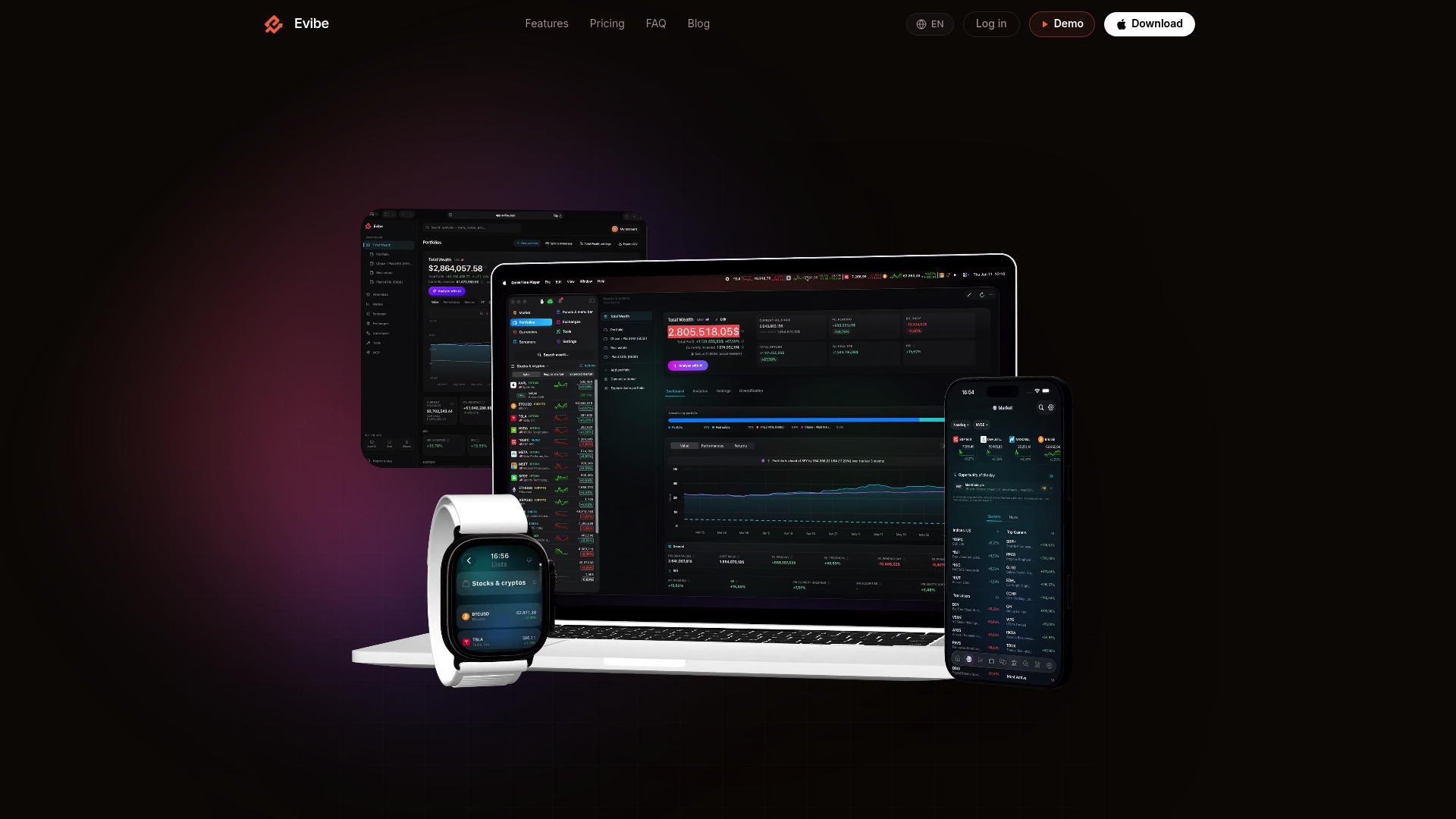
- Custom asset records hold cost basis, provenance, condition notes, and insured value in one place.
- Document and photo attachments keep invoices and appraisal reports tied directly to each item.
- AI-assisted valuation suggestions help you spot a stale estimate before it skews your total picture.
- Automatic bank and brokerage sync means the rest of your portfolio updates itself while you focus on the harder-to-value pieces.
Add your first collectible, attach the invoice, and turn on AI-assisted suggestions to see how it fits into your overall risk picture. The Evibe plan runs $79 per year, and the glossary is worth a look if terms like cost basis or mark-to-market need a quick refresher first.
Primary sources to verify tax and investor-advice claims
The IRS instructions for Form 8949 confirm collectibles' tax treatment and reporting requirements. FINRA's self-directed IRA alert and its liquidity guidance cover valuation risk and independent verification. Morningstar's total-portfolio framework supports the position-sizing approach used throughout this piece. For hobbyist cataloging methods that protect a collection's documented value over time, MagicFranco's guide to managing a card collection is a useful companion read.

This article is general information, not a substitute for advice from a qualified financial advisor. Consult a qualified financial professional about your own circumstances before acting on anything here.
Sources
- Instructions for Form 8949 (IRS)
- Investor Alert: Self-Directed IRAs and the Risk of Fraud (FINRA)
- How to incorporate semiliquid funds into a portfolio (Morningstar)
- Understanding market liquidity and your investments (FINRA)
- Chubb survey of young luxury collectors (reported via Morningstar)
FAQ
Should collectibles be included in a net worth tracker?
Yes, collectibles belong in a consolidated net worth view as long as they're tagged as illiquid and valued conservatively. Treating them separately from the rest of your assets makes it harder to see your true risk exposure and allocation.
How often should I update a collectible's value?
Actively traded categories, like graded coins or popular card sets, are worth checking monthly, while unique or illiquid pieces can be reviewed quarterly or twice a year. The FINRA liquidity guidance notes that illiquid assets are inherently hard to price precisely, which is why a conservative estimate matters more than frequency alone.
What tax form do I use when I sell a collectible?
Sales are reported on Form 8949 and Schedule D, and net capital gains from collectibles can be taxed at a maximum rate of 28% according to the IRS instructions for Form 8949. Keep your cost basis, invoices, and any restoration receipts on hand, since they directly affect the calculation.
Can I track collectibles automatically like stocks or crypto?
Not entirely: collectibles require manual entry since there's no bank or brokerage feed for a coin collection or a painting. In Evibe, you add the item as a custom asset once, and AI-assisted valuation suggestions help keep the estimate current without manual research every month.
Do I need insurance for collectibles I'm tracking as investments?
Many collectors assume homeowners insurance covers valuable items, but a Chubb survey reported via Morningstar found 46% of collectors mistakenly believe this. A scheduled valuables policy or endorsement is typically needed for adequate coverage.