Know When to Sell: Track Your Vehicle’s Value in Your Net Worth
Add your car to your net-worth dashboard, get charts and monthly alerts, and use tracked values to time repairs, insurance, or the right moment to sell.
Know When to Sell: Track Your Vehicle's Value in Your Net Worth

Enter your car's VIN or license plate into a valuation lookup, then save that vehicle inside a tracking tool that emails you alerts and charts the value over time. A tracked value is three things at once: a current estimate, a historical trend line, and a price alert waiting to fire. If you already track investments, a tool like Evibe lets you fold that vehicle into the same net-worth view.
TL;DR:
- Using multiple sources to verify car values ensures more accurate estimates and helps account for market fluctuations driven by demand or recalls.
- Differentiating between trade-in, private-party, retail, and wholesale valuations allows you to set realistic expectations based on how you plan to sell or trade your vehicle.
- Tracking your car’s value over time helps identify depreciation trends, informing repair decisions, negotiations, and whether to sell or hold the vehicle.
- Cross-referencing online appraisal data with vehicle history reports and recall checks shields you from unreported issues or safety hazards impacting market worth.
- Incorporating your vehicle’s tracked value into your broader net-worth view supports more informed financial decisions and better balances your liquidity and assets.
Table of Contents
- How to Set Up Vehicle Value Tracking
- Trade-In vs. Private-Party vs. Retail: Which Number Matters?
- What Data Powers Vehicle Valuations, and Where They Fall Short
- Turning a Tracked Value Into a Decision
- Why Vehicle Value Belongs in Your Net-Worth Picture
- Track Your Car's Value Alongside Everything Else You Own
- Where to Verify the Numbers Yourself
- Sources
- FAQ
How to Set Up Vehicle Value Tracking
Getting a usable number starts with feeding the right inputs into the right tool. Skip a step here and every valuation downstream gets less reliable.
Before you touch a valuation site, gather:
- Your 17-digit VIN (found on the dashboard, driver's door frame, or registration).
- License plate and state, as a backup lookup method.
- Current odometer reading, which is the single biggest swing factor after VIN.
- Condition notes covering interior wear, paint, tires, and any dashboard warning lights.
- Service records for recent repairs, especially anything major like a transmission or timing belt.
- A handful of photos, front, back, sides, and interior, in case a service asks for them.
Three categories of tools handle this data differently. Instant valuation lookups give you a one-time estimate from a VIN. Subscription tracking services save the vehicle profile and push updates as the market shifts. Spreadsheets or portfolio apps work for owners who want to log values manually alongside other assets.
Checking cadence depends on your goal. If you're actively planning to sell, check monthly. If you're a long-term owner just keeping tabs, quarterly is plenty. Either way, set an alert threshold rather than checking on impulse.
To set the alert itself, most tracking tools ask you to pick a trigger type (price drop, price rise, recall notice) and a threshold percentage or dollar amount, then confirm an email or push notification. That's it. The tool does the watching; you just react when it pings you.
Pro Tip: Set two alerts, not one — a percentage drop to catch depreciation, and a recall notice so you're never blindsided by an open safety issue right before a sale.
Trade-In vs. Private-Party vs. Retail: Which Number Matters?
The value you get depends entirely on which number you ask for, and most owners never realize they're comparing apples to oranges.
- Trade-in value is what a dealer pays when you exchange your car toward another purchase. It's the lowest of the four figures because the dealer needs margin to recondition and resell.
- Private-party value is what you'd realistically get selling directly to another individual. It typically lands well above trade-in since there's no dealer markup baked in.
- Retail value reflects what a dealer lists a comparable used car for on their lot, factoring in reconditioning, warranty, and overhead.
- Wholesale value is the dealer-to-dealer or auction price, usually the figure closest to trade-in but driven by auction-specific demand.
Different valuation providers report different types by default, which is why the same car can show three different numbers on three different sites. Edmunds notes there is rarely a single definitive value and recommends comparing trade-in and private-party benchmarks side by side rather than trusting one figure in isolation.
The decision rule is simple: match the value type to how you're actually disposing of the car. Selling to a private buyer? Anchor your asking price to private-party comps. Trading in at a dealership? Know the trade-in figure going in so you can spot a lowball offer immediately.
What Data Powers Vehicle Valuations, and Where They Fall Short
Every valuation is only as good as what feeds it, and the sources behind that number bias toward different things.
- Listing engines pull live retail asking prices from dealer and marketplace inventory, useful for gauging what sellers are currently trying to get.
- Wholesale auction data reflects what dealers pay each other, often the most conservative number in the mix.
- Vehicle-history reports flag accidents, title issues, and odometer discrepancies but stop short of mechanical diagnostics.
- National price indices, like the BLS Consumer Price Index for used cars and trucks, track macro market direction rather than any single car's price.
That BLS index actually illustrates the point well: the used-car component moved from 177.714 in January 2026 to 184.661 by July, a swing large enough to shift perception of "normal" pricing within a single quarter. Treat that kind of index as trend context, not a substitute for your local market comps.
Accuracy limits show up in predictable places. Condition assessments are self-reported unless someone physically inspects the car. Unreported mechanical issues never show up in a VIN lookup. Local demand swings, a sudden gas price spike boosting hybrid interest, for instance, move faster than most valuation tools update. And open recalls can quietly depress a car's marketability long after the original sale.
To verify a number before you act on it, cross-check at least two sources, pull the vehicle's history report, and run the VIN through the NHTSA recall lookup to confirm nothing is outstanding. If condition is genuinely uncertain, a professional inspection settles the question faster than any online tool can.
Turning a Tracked Value Into a Decision
A value chart is only useful once you act on what it shows you.
- Watch for inflection points. A flattening trend after a steep decline often marks the point where further waiting buys you little. Depreciation hits hardest in the first few years of ownership, so tracked history helps you see when the curve has leveled off.
- Build a negotiation file. Print three to five comparable private-party listings, set a firm walk-away price before you start talking, and bring any inspection report that documents good mechanical health.
- Decide whether to repair first. As a rule of thumb, only fix something before selling if the repair cost is less than the value bump a buyer would pay for it fixed. Cosmetic dents rarely clear that bar; a check-engine light almost always does.
- Feed tracked value into insurance and maintenance choices. A declining value curve is exactly when gap insurance stops making sense, and a stable or rising value on a well-maintained car justifies continued investment in upkeep rather than an early sale.
Why Vehicle Value Belongs in Your Net-Worth Picture
A car is a depreciating asset that quietly affects how much liquidity you actually have on hand, yet most owners track it nowhere at all. That's a blind spot, especially for anyone weighing whether to sell a vehicle to fund a down payment or cover an investment opportunity.

Viewing vehicle value next to your brokerage and bank balances changes the decisions you make. A stock portfolio dip next to a car that's holding value steady tells a different story than the same dip paired with a car depreciating fast. Consolidated tracking, pairing vehicle data with your broader net worth, makes sell-or-hold choices coherent instead of siloed.
One caution worth flagging: when you enter or link vehicle details anywhere, favor tools that minimize what personal data they store. A VIN and mileage are enough to get a useful estimate. You rarely need to hand over more than that.
— Vincent
Track Your Car's Value Alongside Everything Else You Own
Some portfolio tracking tools let you add a vehicle as a manual asset and see its value alongside other investments in one dashboard.
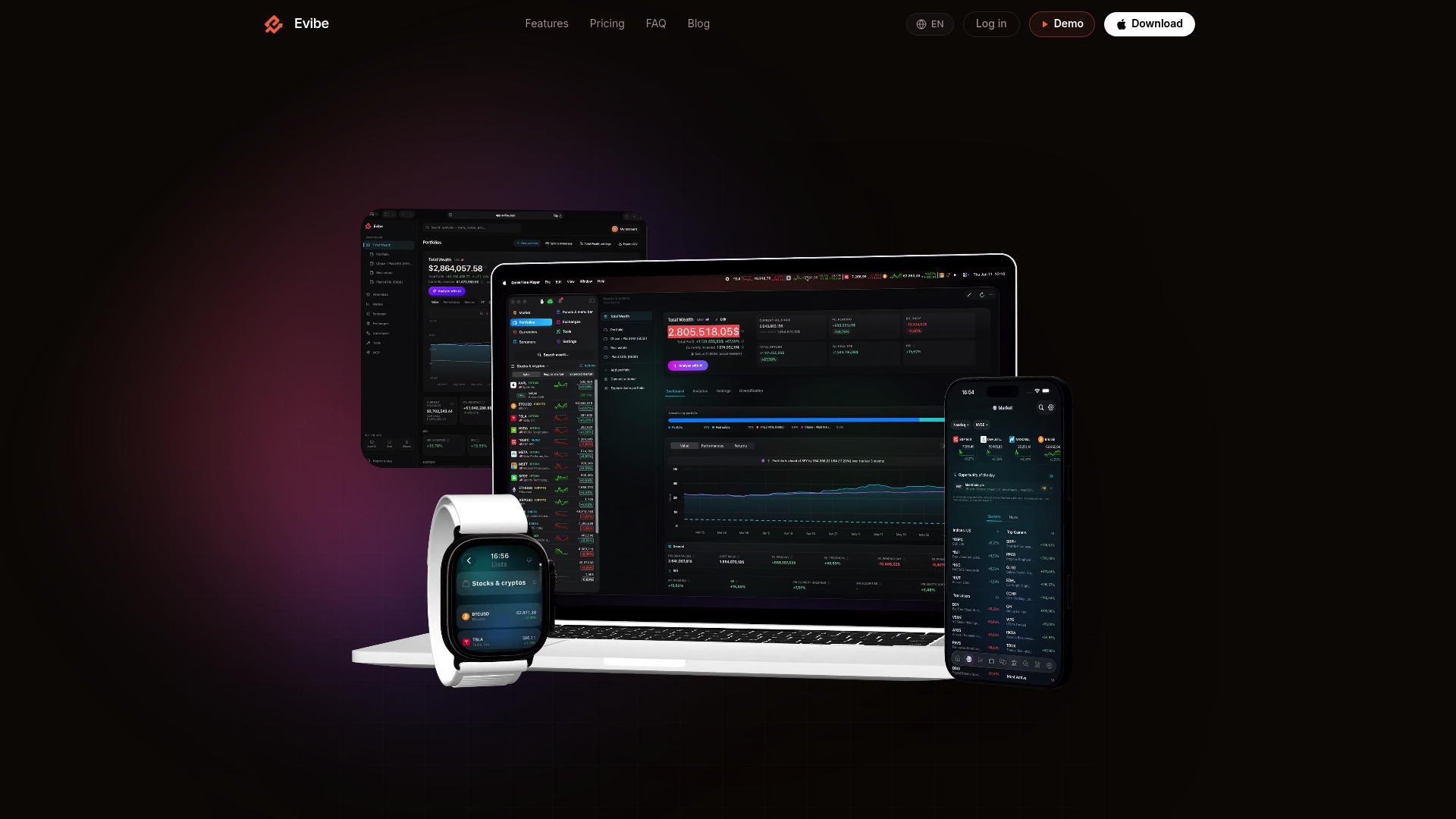
Once you enter your car's estimated value, some tools fold it into your total net-worth view and may apply analysis to show how that asset affects your overall liquidity and diversification. Smart alerts may notify you of meaningful shifts, and some services prioritize user data privacy by not selling data or serving ads. Some portfolio tracking services offer subscriptions to consolidate various asset views, including vehicles, in a single dashboard. If you're already tracking a portfolio of ETFs or dividend income, adding your vehicle takes minutes. Start your free trial on Evibe and see your car's value sit next to the rest of your net worth for the first time.
Where to Verify the Numbers Yourself
Cross-check any tracked figure against primary sources rather than trusting one estimate blindly. The BLS used-car price index shows where the broader market is heading. The NHTSA recall lookup confirms open safety issues by VIN. The FTC's used-car buying guide walks through inspection and negotiation checklists, and sites like CarGurus explain how listing-based data differs from auction data when you're comparing instant estimates.
Sources
- BLS news release: Consumer Price Index report (used cars and trucks)
- NHTSA recall lookup
- Edmunds appraisal
- CarGurus: Used car valuation and market insights
FAQ
How Do I Find My Vehicle's Value for Free?
Most valuation sites let you run a VIN or license plate lookup at no cost to get an instant estimate. For a more complete picture, compare that number against at least one other source, since providers rarely agree exactly.
What Is the $3,000 Rule for Cars?
This isn't an official valuation standard. It's informal buyer advice suggesting that repairs costing more than a significant amount on an older car may not be worth it if the repair cost approaches or exceeds the car's remaining value. Treat it as a rough gut check, not a fixed formula, and weigh it against your own repair estimate and the car's tracked value.
What Is the Most Accurate Car Valuation Site?
No single site is consistently the most accurate because each platform weighs listings, auctions, and history data differently. CarGurus and similar valuation engines recommend cross-referencing at least two sources rather than trusting one number outright.
Is Kelley Blue Book Accurate?
Kelley Blue Book is a widely used and generally reliable benchmark, but like any single valuation source, it reflects one data model rather than the full market. The FTC recommends checking multiple resources and getting an independent inspection before finalizing a price based on any one site.
Can I Track My Car's Value Alongside My Investments?
Yes. Manual-entry tools like Evibe let you add a vehicle as an asset and view its value inside your total net-worth dashboard alongside stocks, crypto, and other holdings, with alerts covering that asset the same way they cover your investments.