15 Minutes a Month: How Individual Investors Track Private Investments
Consolidate private holdings into a single ledger, adopt a valuation policy, and log every capital call, distribution, and K-1. A practical checklist and...
15 Minutes a Month: How Individual Investors Track Private Investments

The most reliable way to track private investments is to consolidate everything into a single multi-asset tracker paired with a documented valuation policy and a cash-flow ledger. This combination captures the irregular capital calls, distributions, and illiquidity that a simple spreadsheet often misses. Your first move: gather your statements, K-1s, and offering documents before you build anything else.
TL;DR:
- Keeping a detailed cash-flow ledger and a documented valuation policy helps accurately track private investments amid irregular capital calls and illiquidity.
- Using a combination of manual, automated, and outsourced tools depends on the number of private positions, entities involved, and cash flow frequency.
- Recording every valuation source, date, and legal entity mapping simplifies reconciliation and ensures compliance with IRS K-1 reporting requirements.
- Private investment metrics like IRR, MOIC, NAV, DPI, and TVPI are vital, but they rely heavily on precise cash flow and valuation data.
- Regular, minimal time investments—about 15 minutes monthly, an hour quarterly, and a few hours annually—are sufficient to maintain an effective private investment tracking system.
Table of Contents
- Quick methods checklist: spreadsheet, privacy-first tracker, or outsourced consolidation
- Step-by-step setup to consolidate private investments into one portfolio view
- Metrics that matter for private investments and how to calculate them
- Tool and workflow choices by investor profile
- Tax, reporting, and regulatory checklist to track alongside your ledger
- Privacy and security best practices when centralizing sensitive investment records
- Author perspective and practitioner checklist
- What most guidance gets wrong about private investment tracking
- Evibe: a privacy-first multi-asset tracker for consolidating private investments
- Authoritative sources and further reading
- Sources
- FAQ
Quick methods checklist: spreadsheet, privacy-first tracker, or outsourced consolidation
Most investors land on one of four practical setups, and each comes with a real tradeoff between automation, control, and privacy.
- Manual spreadsheet: full control over formulas and categories, but every capital call and valuation update requires your own time and discipline.
- Privacy-first multi-asset tracker: automated syncing for public holdings plus manual entry for private positions, with less setup work than a spreadsheet but less customization than building one yourself.
- Advisor or family office platform: professional oversight and reconciliation, useful once your entity structure or number of private positions grows complex, but it comes at a recurring cost and reduced day-to-day control.
- Custodian-provided portal: convenient if most of your private holdings sit with one fund administrator, though it rarely covers assets held outside that platform.
The right choice depends on three factors: how many private positions you hold, how frequently cash flows hit your accounts, and how many tax entities (personal, LLC, trust) sit between you and the K-1s. A handful of positions with occasional distributions can run comfortably on a spreadsheet. Once you are juggling several funds, multiple entities, and quarterly capital calls, a tracker or an advisor earns its keep. Outsourcing makes sense specifically when your entity structure creates tax complexity you cannot reconcile confidently on your own, since Schedule K-1 reporting requires matching cash flows to the correct legal owner.
Step-by-step setup to consolidate private investments into one portfolio view
Building a working system takes an afternoon, not a weekend, if you follow the order below.
- Inventory your documents. Pull brokerage and bank statements, private placement memoranda, subscription agreements, K-1s, cap table snapshots, and closing receipts into one folder structure, one subfolder per entity.
- Choose your import routes. Use CSV templates for brokerage exports, account syncs where your tracker supports them, and email or PDF ingestion for recurring fund statements. Reserve manual entry for one-off items like a SAFE note or a single real estate parcel.
- Write a valuation policy before you need one. Decide your mark-to-market cadence (monthly for liquid positions, quarterly for private ones), your source hierarchy (most recent priced round, then sponsor mark, then independent appraisal), and a rule for recording the date and source of every value you enter. This kind of conservative fallback approach, paired with explicit source and date tagging, makes your numbers far easier to audit later and to reconcile at tax time, a point Investor reinforces when it flags the limited disclosure typical of these offerings.
- Build your cash-flow ledger. Record every capital call as a negative flow and every distribution as a positive one, tagging fees separately so they do not distort your return calculation. This ledger is what eventually feeds your IRR.
- Map positions to the correct legal entity. A single fund investment might sit in your personal name, an LLC, or a trust. Tie each K-1 to its entity now, because the IRS instructions for Schedule K-1 (Form 1065) make clear that you cannot rely on a partnership's ending capital account alone to determine your personal tax basis.
Pro Tip: Keep a single "source of truth" spreadsheet tab that lists every private position's entity, fund administrator, and last valuation date, even if you use a tracker for everything else.
Metrics that matter for private investments and how to calculate them
Public market metrics do not translate cleanly to private holdings, so a different set of numbers earns its place on your dashboard.
- IRR (internal rate of return) accounts for the timing of every capital call and distribution, which makes it the standard metric for private deals where cash moves irregularly over years.
- MOIC (multiple on invested capital) simply divides total value returned by total capital invested, giving you a quick sanity check independent of timing.
- NAV (net asset value) reflects the current estimated worth of your stake based on the latest valuation source you recorded.
- DPI and TVPI separate what has actually been distributed to you (DPI) from the total value including unrealized positions (TVPI), a distinction that matters once a fund is several years into its life.
IRR is money-weighted, meaning it reflects when your cash actually moved, unlike the time-weighted returns used for public portfolios. That difference is exactly why private funds report IRR rather than a simple percentage gain. Benchmarking against a public index rarely means much for illiquid assets, since a private fund's cash flows and holding period rarely resemble the market's. A more useful comparison is against peer funds from the same vintage year, which at least share a similar market entry point.
Practical wisdom worth internalizing: private placements often carry far less standardized disclosure than registered securities, and private placement memoranda are frequently never reviewed by the SEC, according to Investor.gov's overview of private equity. That gap in oversight is exactly why your own recordkeeping, dated values, tagged cash flows, and documented fees, carries more weight for private assets than it does for a brokerage account that reports everything automatically.
Tool and workflow choices by investor profile
Your ideal setup depends less on your net worth and more on how your holdings are structured.
- Solo spreadsheet investor: a handful of private positions, one entity, comfortable building formulas. A well-organized spreadsheet with a disciplined update cadence works fine here.
- Semi-automated tracker user: several private positions across multiple entities, wants automated syncing for public assets and manual entry for private ones without building everything from scratch.
- Family office or advisor-backed investor: many positions, multiple entities, and enough complexity that professional reconciliation saves more time than it costs.
Whichever profile fits you, prioritize these features in any product you evaluate:
- Multi-entity support, so a K-1 tied to an LLC does not get mixed with one tied to a trust.
- Document ingestion for statements and K-1s, not just brokerage syncing.
- Cash-flow modeling that can compute IRR from your recorded capital calls and distributions.
- Guarded manual entry for unique assets like a SAFE or a single real estate parcel.
- Exportability, so your CPA can receive a clean packet rather than a screenshot.
Pro Tip: Set a monthly 15-minute check for new statements and cash flows, a quarterly hour for valuation reconciliation, and a two-hour block once a year to prepare your tax export.
Tax, reporting, and regulatory checklist to track alongside your ledger
Your consolidated ledger is only as useful as the tax records behind it. Schedule K-1s report your share of partnership income, deductions, and credits, and the IRS instructions for Form 1065 are explicit that you cannot use the partnership's ending capital account as a substitute for your own basis calculation.
Before tax season, work through this list:
- Map every K-1 received to the correct legal entity in your ledger.
- Reconcile capital-account changes against your own cash-flow records for the year.
- Flag any private placement or non-traded BDC position for heightened due diligence, since Investor.gov's bulletin on non-publicly traded BDCs notes these vehicles can be illiquid and carry limited public information.
- Prepare a single export packet, statements, K-1s, and your cash-flow ledger, for your CPA rather than sending documents piecemeal.
Worth remembering: private placement offering documents may omit material facts that a registered security's prospectus would be required to disclose, which is one more reason your own dated recordkeeping matters more here than elsewhere in your portfolio.
Privacy and security best practices when centralizing sensitive investment records
Centralizing K-1s, subscription agreements, and account credentials in one place raises the stakes if that system is compromised.
- Use read-only account syncs or tokens wherever your tracker supports them, and never share or email raw login credentials.
- Encrypt stored documents, keep an offline backup, and require two-factor authentication on any account that touches your financial data.
- Ask any vendor directly about data retention, deletion policy, export options, and whether your data is ever shared or sold before you commit.
- Use a password manager, rotate credentials periodically, and limit an advisor's access to only the entities they actually manage.
Author perspective and practitioner checklist
The cadence that actually holds up over time is lighter than most investors expect: about 15 minutes a month for new statements and cash flows, an hour each quarter for valuation reconciliation, and a couple of hours once a year for tax prep. The blind spots that trip people up are rarely dramatic: an unrecorded SAFE, a capital call logged late, a K-1 item filed and forgotten. Catching those comes down to the habit, not the tool.

What most guidance gets wrong about private investment tracking

Most advice on this topic treats private investments like a filing problem: keep your documents organized and you are done. The real challenge is the valuation gap. Public holdings mark themselves every second the market is open; private ones sit still for months until a fund administrator or a new round gives you a fresh number. Readers who build a strict valuation policy up front, source hierarchy, recording date, conservative fallback, spend far less time arguing with their own numbers later.
The metric obsession is also somewhat overrated. IRR and MOIC matter, but they are only as good as the cash-flow ledger behind them. A clean, tagged ledger with accurate dates will produce more useful IRR than a fancier calculator fed sloppy inputs. If you take one thing from this guide, prioritize the ledger and the valuation policy before you worry about which tracker looks the nicest.
— Vincent
Evibe: a privacy-first multi-asset tracker for consolidating private investments
Evibe consolidates stocks, ETFs, crypto, real estate, and manually entered private holdings into one dashboard, with automatic syncing for bank and brokerage accounts alongside manual entry for the unique positions a spreadsheet usually handles alone.
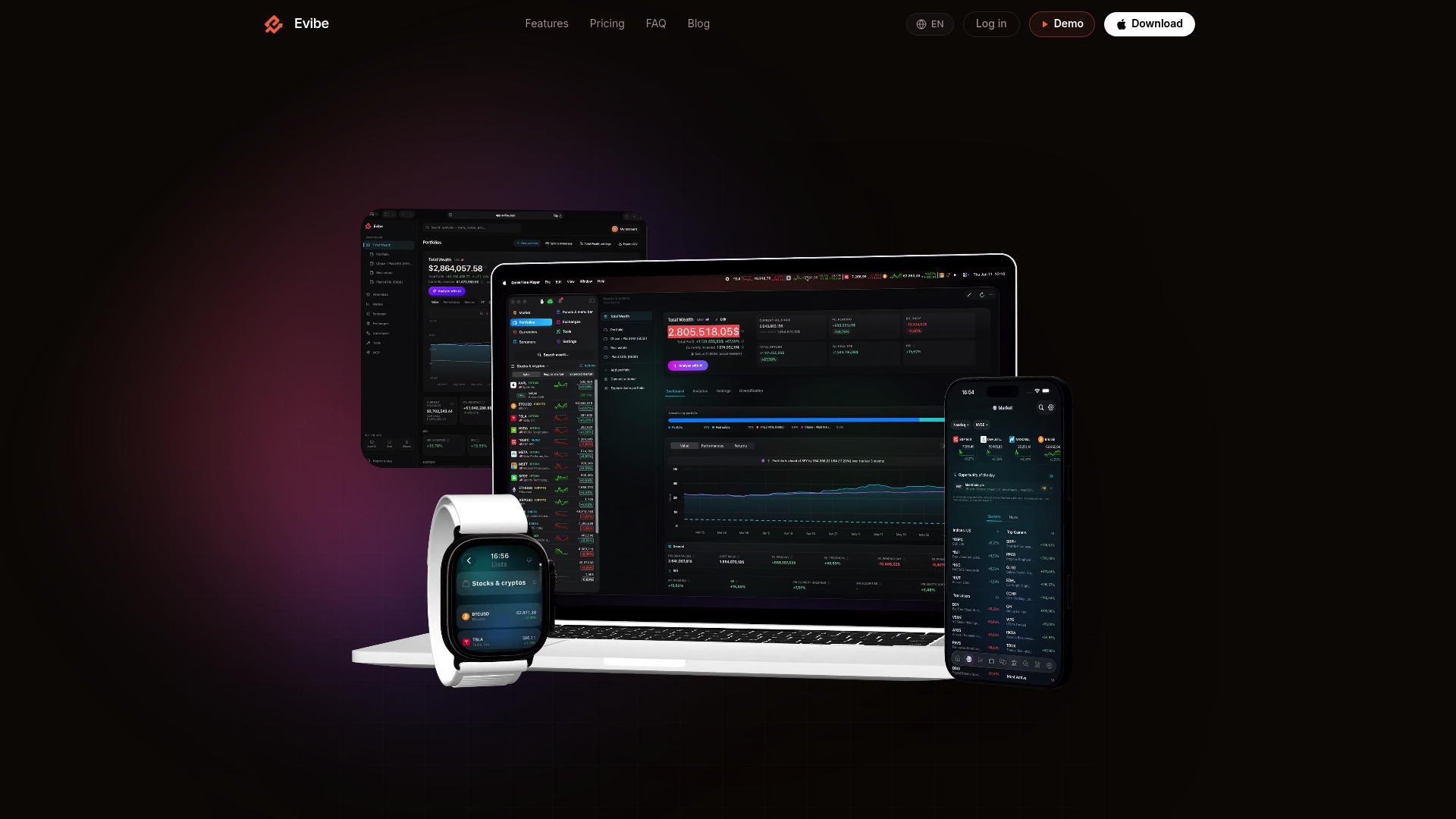
That combination matches the feature checklist above: document-friendly manual entry, cash-flow recording, and AI-driven risk and diversification insights, built on privacy-first data handling that never stores your passwords. The Evibe plan runs $79 per year, with a 7-day free trial to see if it fits how you actually track your holdings.
Authoritative sources and further reading
For primary guidance on the regulatory side of private investing, Investor.gov's overview of private equity and its bulletin on non-publicly traded BDCs both cover disclosure limits and liquidity risk. For tax reporting, the IRS instructions for Schedule K-1 (Form 1065) explain how partnership income and basis are reported.
Sources
Follow a source hierarchy you set in advance: the most recent priced round first, then a sponsor's own mark, then an independent appraisal as the conservative fallback. Recording the date and source of each value you use makes it far easier to explain, and reconcile, any discrepancy later.
FAQ
What is the best way to track private investments?
The most reliable approach combines a single multi-asset tracker or spreadsheet with a documented valuation policy and a cash-flow ledger that records every capital call, distribution, and fee. This lets you calculate IRR and MOIC accurately instead of guessing at a rough gain.
How do I estimate the liquidity and exit timeline of a private investment?
Check your subscription agreement or offering memorandum for lock-up periods, redemption windows, or expected fund life, since private investments are typically illiquid and meant to be held for long horizons, as Investor.gov's bulletin on Regulation D placements notes. Track the fund's stated term and any distribution schedule in your ledger so you can anticipate cash flow timing rather than react to it.
What documents do I need to reconcile K-1s with my tax filing?
You need the K-1 itself, your own cash-flow ledger for that entity, and any capital-account statements the fund administrator provides during the year. The IRS instructions for Schedule K-1 (Form 1065) make clear that the partnership's ending capital account is not a substitute for calculating your own tax basis.
How often should I update valuations for private assets?
A quarterly cadence works for most private holdings, since new marks from fund administrators or priced rounds rarely arrive more often than that. Between updates, log any known capital calls or distributions in your cash-flow ledger so your IRR stays current even while the valuation itself sits still.