Reduce Concentration Risk With 5%–10% Triggers, Staged Sales and Evibe
Practical steps to reduce concentration risk with a tax aware staged sale plan, simple option hedges, exchange funds, and Evibe tracking to measure exposure.
Reduce Concentration Risk With 5%–10% Triggers, Staged Sales and Evibe

To reduce concentration risk, trim or hedge outsized positions through a tax-aware staged plan, diversify proceeds into broad funds, or route shares into pooled and charitable vehicles designed for exactly this problem. The right lever depends on your liquidity needs and tax exposure: staged selling works for most people, hedging buys time during lockups, and exchange funds or trusts suit larger, less liquid positions. Whichever path you pick, measure the position first and monitor it after.
TL;DR:
- Diversification tools like exchange funds or charitable trusts require substantial minimum investments and lock-up periods, making them suitable mainly for high-net-worth investors.
- A concentration ratio above 40 percent for the top five holdings or a Herfindahl-Hirschman Index significantly rising signals increased portfolio risk that should trigger action.
- Implementing a staged selling plan with a 5 to 10 percent threshold helps manage large positions gradually while controlling capital gains taxes over multiple years.
- Hedging strategies such as covered calls or protective puts offer temporary risk reduction during lockups or restrictions but do not decrease underlying concentration.
- Regular monitoring through consolidated portfolio tracking and recalibration when positions drift 5 to 10 percent from targets are essential to maintaining effective concentration management.
Table of Contents
- What Is Concentration Risk and Why Does It Matter?
- Which Strategies Actually Reduce Concentration Risk?
- How Do You Build a Tax-Aware Selling Plan?
- Should You Hedge With Options Instead of Selling?
- What Are Exchange Funds and Who Should Use Them?
- How Do Trusts and Gifting Reduce a Concentrated Position?
- How Do You Measure Concentration Risk in Practice?
- How Do You Build a Staged Implementation Plan?
- When Should You Keep a Concentrated Position?
- How Does an Aggregated Tracker Help You Reduce Concentration Risk?
- What Actually Works vs. What Sounds Good on Paper
- Track Your Real Exposure Before You Act on It
- Sources
- FAQ
What Is Concentration Risk and Why Does It Matter?
Concentration risk shows up when one holding, sector, or market segment carries enough weight to move your entire net worth on its own. It's the founder who never sold employer stock after the IPO, the retiree whose 401(k) rolled into one legacy pension fund, or the tech investor whose "diversified" ETF basket actually owns the same five mega-cap names five different ways.
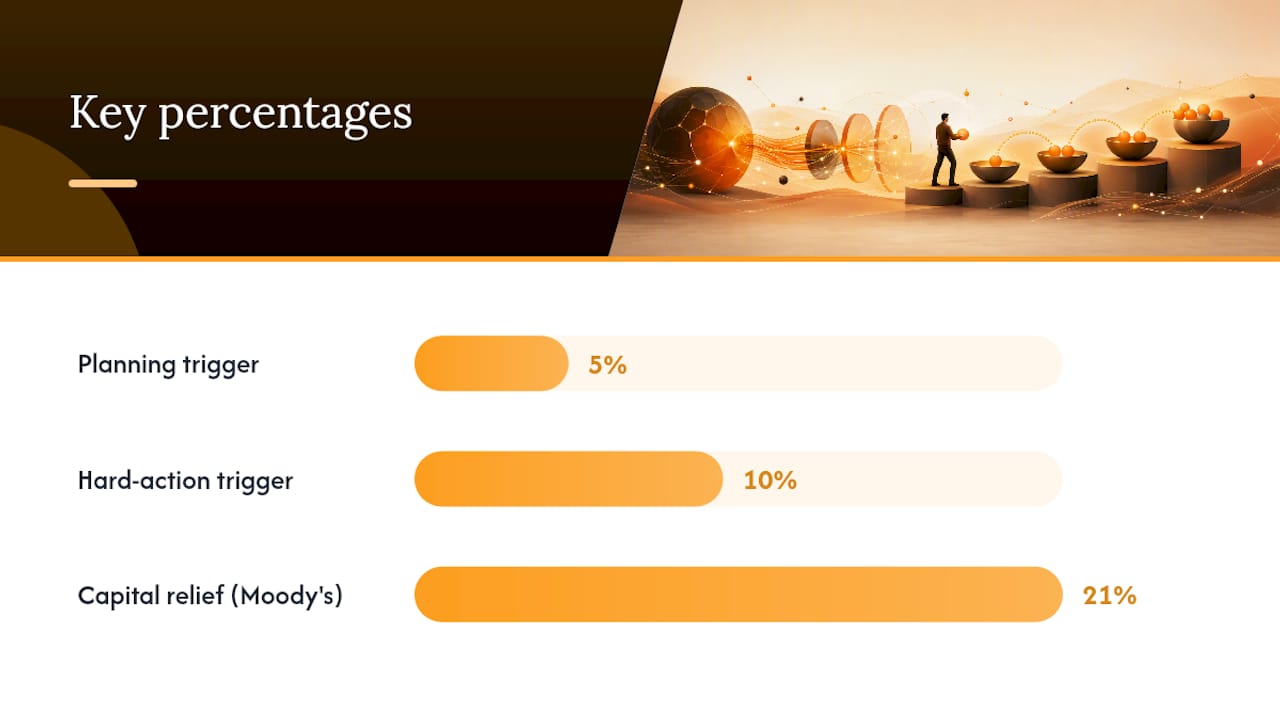
The stakes are real, and they're measurable. Moody's analysis of credit portfolios found that removing concentration impact delivered roughly 21% capital relief. That's not a rounding error. It's a direct read on how much risk a single dominant exposure adds to a portfolio, and it tracks with what happens on the equity side: a stock that drops 40% wipes out a much bigger share of your net worth when it's 30% of your holdings than when it's 5%.
T. Rowe Price sets a useful threshold. Concentration risk analysis starts with that number, not with a vague sense that "I own a lot of Apple."
Which Strategies Actually Reduce Concentration Risk?
Not every mitigation strategy fits every investor. Some require deep pockets and an advisor on speed dial; others you can start this afternoon in a brokerage app.
- Staged selling. Lowest barrier to entry, works at any account size, but generates capital gains you need to manage across tax years.
- Diversifying into broad ETFs. Cheap, liquid, and simple, though it only works once you've actually reduced the concentrated position first.
- Covered calls and collars. Good for buying time during blackout periods or lockups, but they cap upside and carry ongoing maintenance.
- Exchange funds. Defer capital gains and swap into a diversified pool, but typically require $500,000 or more and lock up capital for years.
- Charitable remainder trusts and donor-advised funds. Powerful tax tools for philanthropically inclined investors, but irrevocable and not designed for people who want the money back.
If you're facing a trading blackout or employment restrictions, hedging is your bridge. If you have no lockup and a normal brokerage account, staged selling is almost always the fastest, cheapest starting point. If you're sitting on a position worth seven figures and want to stay diversified without paying a tax bill today, exchange funds deserve a serious look.
How Do You Build a Tax-Aware Selling Plan?
A staged selling plan turns "I should probably sell some of this" into a documented, repeatable process. Here's the sequence that actually works:
- Set your threshold. Use the 5% to 10% band as your trigger for planning, and treat anything above 10% as a hard deadline for action, per T. Rowe Price's guidance.
- Build an annual capital-gains budget. Decide how much realized gain you can absorb this year without jumping a tax bracket or triggering the net investment income tax, then divide your target sale amount across however many years that budget requires.
- Sell specific lots, not "some shares." Select high-basis lots first to minimize the taxable gain per share sold, and keep a written log of which lots you sold and why.
- Offset with tax-loss harvesting. Pair gains from the concentrated position with losses elsewhere in your portfolio in the same tax year.
- Check for NUA if it's employer stock in a 401(k). Net unrealized appreciation rules can let you pay long-term capital gains rates instead of ordinary income rates on the appreciated portion, but the mechanics are strict and mistakes are costly.
- Factor in gifting before year-end. The 2026 annual gift-tax exclusion sits at $19,000 per recipient, which means a married couple can move $38,000 worth of appreciated shares to one person, gift-tax-free, every year.
Pro Tip: Sell your highest-basis shares first unless you're deliberately harvesting losses elsewhere. It sounds obvious, but most brokerage default settings sell "first in, first out," which often triggers the largest possible gain.
Moody's found that eliminating concentration effects freed up about 21% in capital relief in credit portfolios, a number that underscores why a staged plan, even a slow one, is worth the tax friction along the way.
Should You Hedge With Options Instead of Selling?
Hedging buys you time without triggering a sale. It's the right tool when you're locked out of trading, restricted by an employer, or simply not ready to realize a large gain this tax year.
- Covered calls. You sell call options against shares you already own, collecting premium income in exchange for capping your upside if the stock rallies past the strike price.
- Protective puts. You buy the right to sell at a fixed price, insuring against a crash, but you pay a premium for that protection every time you renew it.
- Collars. You combine a covered call and a protective put, often financing the put's cost with the call's premium, which narrows your range of outcomes in both directions.
T. Rowe Price notes that these strategies limit downside but come with real costs and ongoing operational needs. Rolling options positions every month or quarter takes attention, and exercised covered calls can still create a taxable event if the shares get called away.
Hedging makes the most sense during a blackout period ahead of an earnings release, during the vesting cliff on restricted stock, or when you're waiting out a specific holding period to qualify for long-term capital gains treatment. It makes less sense as a permanent solution. Options decay, premiums cost money every cycle, and none of it actually reduces your concentration. It just insures it temporarily.
Pro Tip: *If you're using a collar to protect a concentrated position, calculate the cost of maintaining it for a full year before you commit.
What Are Exchange Funds and Who Should Use Them?
An exchange fund lets you swap a concentrated stock position for a diversified basket of units in a pooled vehicle, without triggering the capital gains tax you'd owe on an outright sale. You contribute your shares alongside other investors contributing their own concentrated positions, and the fund pools everyone's holdings into one diversified portfolio.
The trade-off is liquidity. Most exchange funds require you to hold your position for around seven years before you can redeem it for a diversified basket of the underlying securities, and minimums commonly start around $500,000, which puts them out of reach for most retail investors.
- Gains are deferred, not eliminated, so you'll owe tax eventually when you exit or the fund dissolves.
- Fees run higher than a typical index fund, often in the 1% to 1.5% range annually.
- The diversified basket you eventually receive rarely mirrors a simple market-cap index. It reflects whatever pool of contributed stocks other participants brought in.
For investors below that minimum threshold, the practical alternative is simpler: sell in stages and reinvest proceeds into a broad diversification strategy that spreads exposure across sectors and geographies instead of concentrating it in one pooled vehicle. Donor-advised funds offer a parallel route for anyone comfortable giving up ownership entirely in exchange for an immediate tax deduction.
How Do Trusts and Gifting Reduce a Concentrated Position?
Charitable remainder trusts (CRTs) let you contribute appreciated stock, avoid immediate capital gains tax on the contribution, and receive an income stream for a set term or for life. When the term ends, whatever remains in the trust goes to the charity you named.
The catch is permanence. A CRT is irrevocable. Once you fund it, you cannot change your mind and get the full asset back, though the income stream and the upfront tax deduction make it attractive for investors who are already charitably inclined and want to diversify a large position without a lump-sum tax hit.
- Direct gifting of appreciated shares to a donor-advised fund avoids capital gains entirely and delivers an immediate deduction based on fair market value.
- Gifting to family members uses the annual exclusion. In 2026, that exclusion is $19,000 per recipient, so a couple can move $38,000 to one child, grandchild, or other recipient every year without filing a gift-tax return.
- Estate timing matters because heirs who inherit appreciated stock typically receive a step-up in basis, which can eliminate the embedded gain entirely if you hold rather than gift certain positions.
None of these tools work well as a fast exit. They're built for investors who have already decided that giving, not just selling, is part of the plan.
How Do You Measure Concentration Risk in Practice?
You can't manage what you haven't measured, and "it feels like a lot of one stock" isn't a metric. Three tools do the real work.
The Herfindahl-Hirschman Index (HHI) sums the squared weight of each holding in your portfolio. Financial researchers and regulators favor HHI because it penalizes dominant positions more heavily than a simple percentage weighting does, a point IMF research on portfolio concentration makes when comparing single-metric approaches to more complete pictures.
Conditional Value at Risk (CVaR) estimates your average loss in the worst-case tail scenarios, rather than just the single worst day. It answers a more useful question than standard deviation: not "how volatile is this," but "how bad does it get when things go wrong."
The concentration ratio simply adds up the weight of your top three or top five holdings. It's blunt, but it's fast, and it catches the problem that HHI and CVaR sometimes bury in more complex math.
| Metric | What it measures | Signal to watch |
|---|---|---|
| HHI | Weighted dominance across all holdings | Rising score even with many positions |
| Concentration ratio | Combined weight of top 3 to 5 holdings | Top 5 exceeding 40% of the portfolio |
| CVaR | Average loss in worst-case tail scenarios | Tail loss disproportionate to overall volatility |
Fund overlap hides concentration in plain sight. Two ETFs with different names can hold the same mega-cap tech stocks at nearly identical weights, and Britannica's overview of concentration risk management points out that investors need to "look under the hood" of each fund rather than assume diversification from ticker count alone. An ETF overlap analysis run across your actual holdings will catch this faster than eyeballing fund names.
For rebalancing cadence, FINRA recommends checking allocations on a regular schedule rather than reacting only after a big move. A common rule of thumb: rebalance when any position drifts 5 to 10 percentage points from its target weight, whichever comes first, calendar date or drift threshold.
How Do You Build a Staged Implementation Plan?
Turning strategy into action means moving through a defined sequence, not making one big decision and hoping it holds up.
- Quantify the exposure. Calculate exact position weight, HHI contribution, and dollar value at risk in a 30% drawdown scenario.
- Set a target allocation. Decide what percentage this position should represent in twelve months, using the 5% to 10% band as your ceiling for a single name.
- Choose your mitigation path. Match your liquidity needs and tax situation to staged selling, hedging, exchange funds, or a charitable route.
- Run a tax simulation before you trade. Estimate the capital-gains impact of your planned sales across this year and next, and adjust lot selection accordingly.
- Execute in stages with lot-level tracking. Sell or hedge in tranches, documenting which lots you touched and why, rather than executing one large trade.
- Reinvest proceeds deliberately. Route capital into broad ETFs or dividend-paying defensive sectors rather than letting cash sit idle or drift back into a new concentrated bet.
- Schedule a review. Set a calendar reminder for annual reassessment, and add a trigger review after any material event like an acquisition, a lockup expiration, or a major price move.
Pro Tip: *Write down your target allocation and your reasoning the day you set it.
When Should You Keep a Concentrated Position?
Sometimes the right move is to hold, and pretending otherwise does investors a disservice. Legal restrictions, lockup agreements, and blackout windows can make selling literally impossible for a period of time. Employer stock inside a 401(k) with NUA eligibility might make holding until distribution more tax-efficient than an early sale, depending on your specific basis and bracket.
Genuine conviction counts too, provided it's backed by more than attachment to a stock that's made you money before. The distinction between conviction and inertia is whether you've recently run the numbers or simply haven't gotten around to selling.
- Watch for correlation creep. A position that used to diversify your other holdings can quietly become correlated with them as your portfolio grows.
- Set alerts on financial health, not just price. Deteriorating fundamentals matter more than a stock price dip.
- Red flags that should end the "hold" decision: insider selling by executives, a credit downgrade, a dividend cut, or the position crossing 20% of total net worth with no corresponding thesis update.
Monitoring, not paralysis, is what separates a deliberate hold from a position you've simply stopped paying attention to.
How Does an Aggregated Tracker Help You Reduce Concentration Risk?
Most concentration problems hide across accounts. Portfolio tracking apps consolidate stocks, ETFs, options, crypto, and other assets from multiple accounts into one dashboard, so the true weight of a position becomes visible instead of scattered across several logins.
- Account aggregation across brokerages surfaces overlap that a single-account view can't catch.
- Some portfolio tracking apps feature risk and diversification metrics that flag concentration as it builds, not months after the fact.
- Smart alerts can notify you when a position's weight crosses a threshold you've set.
- Exported reports can give you a documented record of exposure over time, useful when you sit down with a tax professional to plan staged sales or gifts.
The measurement and monitoring steps described above only work if you actually run them consistently. That's the gap a consolidated tracker is built to close.
What Actually Works vs. What Sounds Good on Paper
The biggest mistake I see is treating diversification as an event instead of a process. Concentration risk rarely arrives suddenly. It creeps back in after you've stopped watching.
The second mistake is letting tax anxiety become an excuse for inaction. Yes, a staged sale over two or three years costs more in near-term taxes than doing nothing. But the gap between what you'd lose in a 40% drawdown on an oversized position and what you'd pay in capital gains tax to avoid that exposure is rarely close. Write down your reasoning, loop in a tax professional before you execute anything irreversible like a CRT or a large gift, and treat the plan as a living document, not a one-time fix.
— Vincent
Track Your Real Exposure Before You Act on It
Every strategy in this guide starts with the same question: how concentrated are you, really, across every account you hold? Some portfolio tracking tools answer that by syncing your banks and brokerages into one dashboard, so a position spread across multiple accounts shows up as one true weight instead of several misleading fractions.
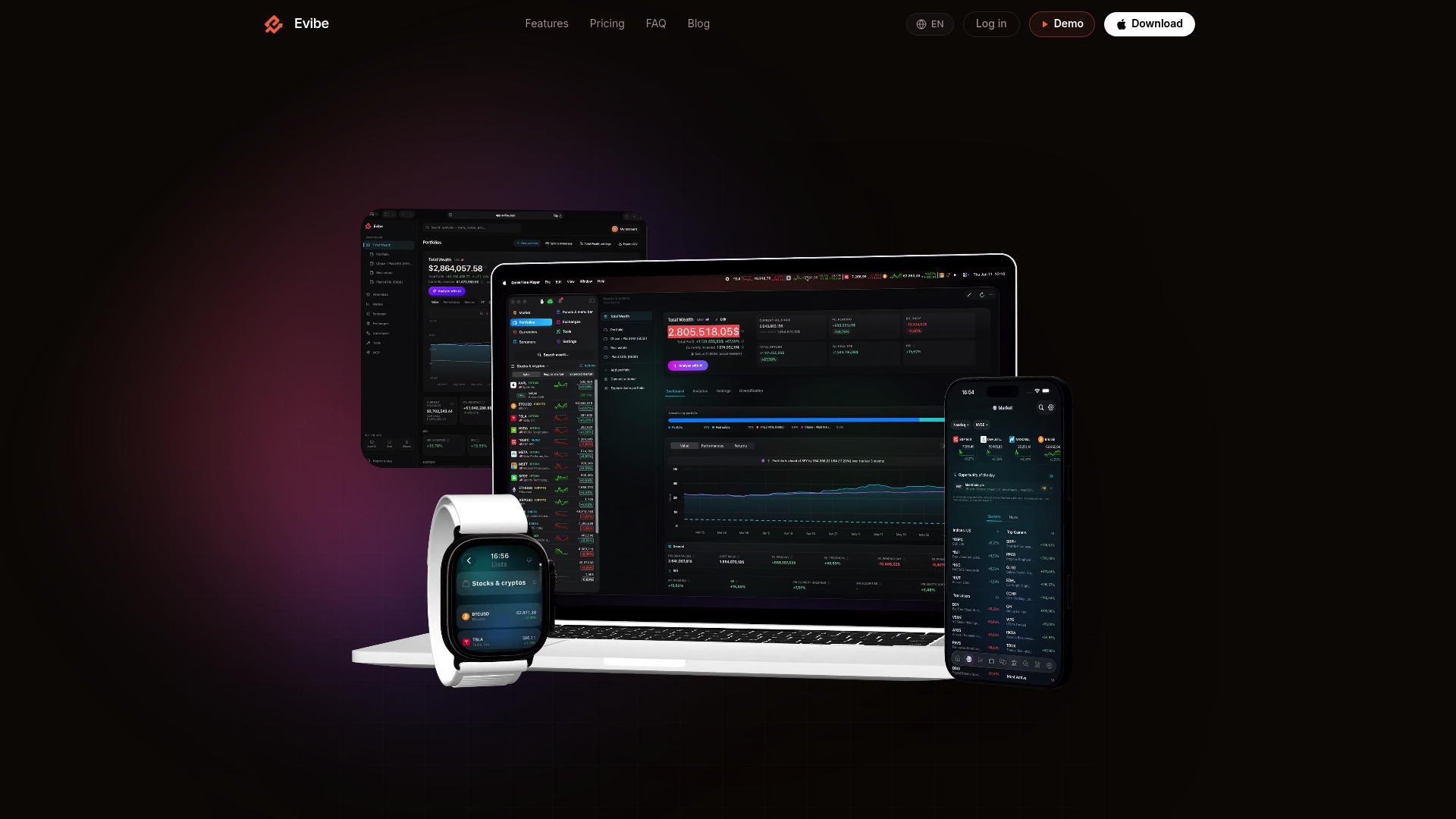
If you're managing a large equity position, the stock portfolio tracker gives you lot-level detail for staged selling, and the ETF tracker helps you check overlap before you reinvest proceeds. For anyone hedging with options, the options tracker monitors Greeks and expiry dates in the same dashboard. Start free and run your own concentration numbers before your next rebalancing decision.
This article is general information, not a substitute for advice from a qualified financial advisor. Consult a qualified financial professional about your own circumstances before acting on anything here.
Sources
- Analyzing concentration risk in credit portfolios — Moody's
- Helpful actions you can take to reduce concentration risk in your portfolio — T. Rowe Price
- Concentration risk — FINRA
- 2026 gift tax exclusions — Farm Office (Ohio State extension)
FAQ
What Does Concentration Risk Mean?
It means a large share of your portfolio's value depends on one stock, sector, or asset class, so a decline in that single exposure causes outsized damage to your overall net worth.
Are People Losing Money in the Stock Market Right Now?
Markets move in cycles, and drawdowns happen regularly regardless of the calendar year; investors with concentrated positions in a single stock or sector typically feel those swings far more sharply than diversified investors do.
What Is Warren Buffett's 70/30 Rule?
There's no single, universally defined concentration rule attributed to Warren Buffett; the guidance most often referenced relates to a general stock-to-bond allocation he has recommended for simple index investing, not a formal concentration guideline.
I Lost Money Holding a Single Stock. What Should I Do Now?
Start by quantifying the current position size relative to your total net worth, then work through a tax-aware staged plan, potentially pairing any remaining losses with tax-loss harvesting before deciding on a diversification target.
How Much of One Stock Is Too Much?
T. Rowe Price.