Personal Capital Alternatives for Investors: Top Picks
Discover the best Personal Capital alternatives — Evibe, Monarch Money, and Wealthfront — to privately track investments and manage your finances better.
Personal Capital Alternatives for Investors: Top Picks

TL;DR:
- Evibe is the top replacement for Personal Capital, offering full asset tracking with no advisory upsell. It consolidates diverse assets into one dashboard, providing AI analysis and real-time net worth updates without data monetization. Users seeking comprehensive, privacy-focused management should consider Evibe for their financial overview needs.
The three strongest replacements for Personal Capital (Empower) right now are Evibe for full asset coverage with no advisory upsell, Monarch Money for budgeting-first households, and Wealthfront for users who want automated investing without managing it themselves. As financial experts note, true all-in-one replacements are rare — your best move is to pick by your primary need.
TL;DR:
- Evibe — Best overall replacement: tracks stocks, ETFs, options, crypto, real estate, collectibles, and more in one dashboard; subscription-based with no ads, no data selling, no advisory upsell
- Monarch Money — Best for budgeting-first users who also want investment visibility
- Quicken Simplifi — Best for users who want a lightweight, low-cost budgeting and spending tracker
- Kubera — Best for high-net-worth users tracking private equity, crypto, and alternative assets
- Wealthfront — Best robo-advisor alternative for hands-off automated investing
- SigFig — Best for users who want free portfolio analysis with optional managed accounts
- Portfolio Genius — Best for users who want AI-driven portfolio insights and tax-loss harvesting guidance
- Personal Capital (Empower) — Still a solid free dashboard, but the advisory upsell and privacy model are why most users are here looking for something else
Table of Contents
- How do the top Personal Capital alternatives compare?
- Mini reviews: the best alternatives to Personal Capital (Empower)
- How do you choose the right replacement?
- Why are users leaving Personal Capital (Empower)?
- How we compared these alternatives
- Why Evibe stands out as the top replacement for full asset coverage
- Key Takeaways
- The tools that actually matter depend on what you're tracking
- Evibe tracks everything Empower doesn't, without the advisory pressure
- Useful sources and further reading
How do the top Personal Capital alternatives compare?
| Tool | Best For | Pricing | Net Worth Tracking | Investment Analytics | Budgeting | Retirement Tools | Asset Types | Privacy / Business Model | Mobile App |
|---|---|---|---|---|---|---|---|---|---|
| Evibe | Full asset coverage, no advisory upsell | Free plan; Premium $9.99/mo or $99.99/yr | Yes, real-time | AI-driven, benchmarking, options Greeks | No | No | Stocks, ETFs, options, crypto, real estate, art, vehicles, startups, collectibles, cash | No ads, no data selling, subscription-funded | iPhone & Mac |
| Portfolio Genius | AI portfolio insights, tax guidance | Free tier; paid plans available | Yes | AI-driven, tax-loss harvesting | Limited | Limited | Stocks, ETFs, mutual funds | Not publicly detailed | Yes |
| Monarch Money | Budgeting + investment overview | ~$14.99/month or ~$99.99/year | Yes | Basic | Strong | Basic | Stocks, ETFs, cash, crypto (limited) | Subscription-funded, no data selling | iOS & Android |
| Quicken Simplifi | Lightweight budgeting and spending | ~$3.99/month | Limited | Minimal | Strong | Minimal | Bank, credit, basic brokerage | Subscription-funded | iOS & Android |
| Kubera | HNW multi-asset tracking | ~$150/year | Yes | Moderate | No | No | Stocks, ETFs, crypto, real estate, private equity, domain names | Subscription-funded | iOS & Android |
| Wealthfront | Automated investing / robo-advisor | 0.25% AUM (no free tier for managed) | Yes (cash + invest) | Moderate | Basic | Yes | ETFs, bonds, cash | AUM-funded | iOS & Android |
| SigFig | Free portfolio analysis | Free analysis; 0.25% AUM for managed | Yes | Strong | No | Basic | Stocks, ETFs, mutual funds | AUM-funded for managed | iOS & Android |
| Personal Capital (Empower) | Free net worth + investment dashboard | Free dashboard; advisory AUM fees apply | Yes | Strong | Basic | Yes | Stocks, ETFs, cash, real estate (manual) | Advisory AUM-funded | iOS & Android |
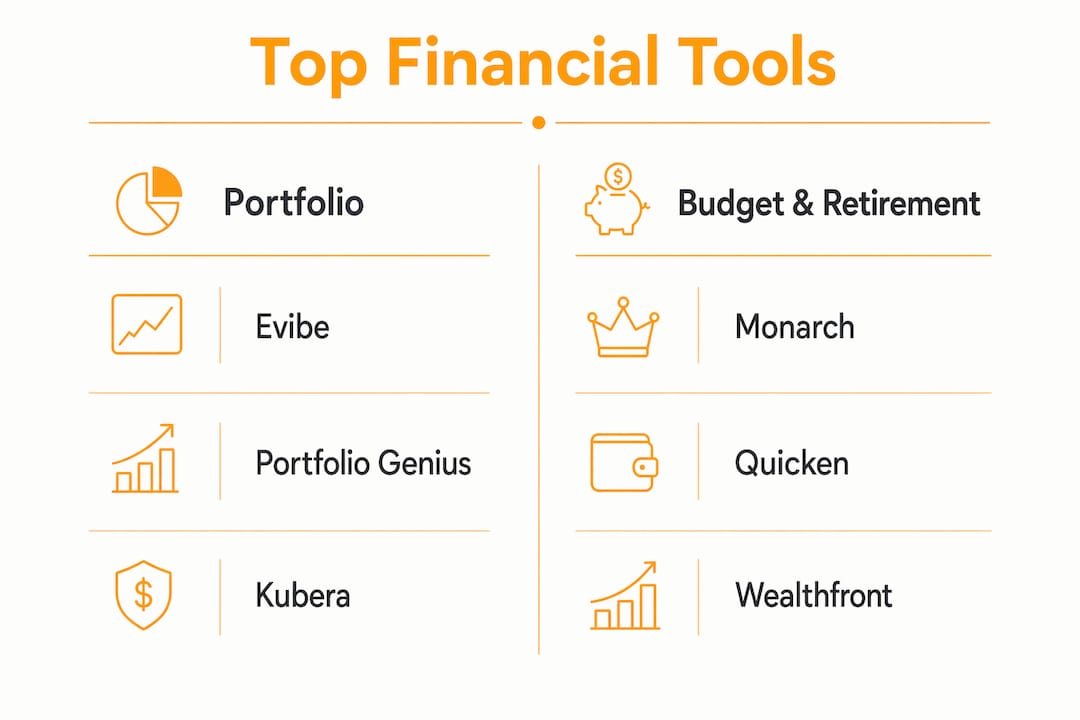
Pro Tip: Before picking a tool, decide which pillar matters most to you: portfolio analytics, budgeting, or retirement planning. No single app does all three at the same level, and trying to find one that does often means settling for mediocrity across the board.
Mini reviews: the best alternatives to Personal Capital (Empower)
Evibe
Evibe is the most complete asset-coverage replacement for users who want a real-time net worth dashboard without being pushed toward advisory services. It consolidates stocks, ETFs, options (with Greeks and expiry calendars), crypto, real estate, art, vehicles, startups, loans, collectibles, and cash into one view, with automatic syncing for 1,000+ banks, brokerages and crypto exchanges across the US, Canada and Europe.
Strengths:
- Tracks the widest range of asset classes of any tool in this list, including alternatives most apps ignore
- AI-driven analysis covers risk, diversification, and performance in plain language
- Dividend tracking with yield on cost, plus options portfolio tracking with Greeks
- Multi-currency support with historical FX rates — useful for investors holding foreign assets
- API endpoints connect to AI assistants like ChatGPT, Claude, and Gemini for custom analysis
- No ads, no data selling, no advisory upsell — the subscription is the entire business model
Limitations:
- Advanced features (broker sync, AI analysis) need Premium
- No built-in budgeting or cash-flow management
- No managed investment or robo-advisor service
Pricing: Free to use; Premium ($9.99/month or $99.99/year) via the Apple App Store, with 7 days of Premium on every new account.
Security note: Because Evibe is subscription-funded and does not sell data or run advisory services, the incentive structure is aligned with the user, not with converting them to a managed account.
Portfolio Genius
Portfolio Genius positions itself as an AI-first portfolio analysis tool, with a particular focus on tax-loss harvesting guidance and portfolio optimization. It suits investors who want actionable analytics on their existing holdings without switching brokers.
Strengths:
- AI-driven portfolio insights and tax-loss harvesting recommendations
- Free tier available for basic analysis
- Clean interface suited to self-directed investors
Limitations:
- Budgeting and retirement planning are limited
- Asset class coverage is narrower than dedicated multi-asset trackers
- Advisory and managed account details are not publicly listed in full
Pricing: Free tier available; paid plans for advanced features (pricing not publicly listed in full detail).
Security note: Business model details are not fully public; review their privacy policy before connecting accounts.

Monarch Money
Monarch Money is the strongest budgeting-first replacement for Personal Capital among the tools here. It gives you a clear picture of income, spending, and savings goals alongside a basic investment overview — a combination that Empower's dashboard never quite nailed on the budgeting side.
Strengths:
- Detailed budgeting, spending categories, and goal tracking
- Collaborative features for couples and households
- Investment account visibility alongside cash flow
- Subscription-funded with no data selling
Limitations:
- Investment analytics are basic compared to dedicated trackers
- Crypto support is limited
- No retirement planning tools of substance
Pricing: Approximately $14.99/month or $99.99/year.
Security note: Subscription model means no incentive to upsell advisory services or monetize your data.

Quicken Simplifi
Simplifi is Quicken's modern, lightweight app — a sharp contrast to the legacy desktop software the brand is known for. If your main frustration with Empower was that it felt like overkill for day-to-day spending management, Simplifi is worth a look.
Strengths:
- Clean, fast budgeting and spending tracker
- Low monthly cost
- Solid bank and credit card connectivity
Limitations:
- Investment analytics are minimal
- Not suited for tracking alternative assets or complex portfolios
- No retirement planning tools
Pricing: Approximately $3.99/month.
Security note: Subscription-funded; Quicken has a long track record in U.S. personal finance software.
Kubera
Kubera is built specifically for high-net-worth users who hold assets that most apps cannot handle: private equity, domain names, crypto wallets, real estate, and foreign accounts. Specialized trackers like Kubera consistently outperform general-purpose dashboards when the portfolio includes non-traditional assets.
Strengths:
- Excellent support for alternative and private assets
- Tracks domain names, crypto, real estate, and private equity alongside traditional accounts
- Clean net worth dashboard with beneficiary and estate planning notes
Limitations:
- No budgeting features
- No investment analytics beyond net worth tracking
- Higher annual cost than most budgeting-focused tools
Pricing: Approximately $150/year.
Security note: Subscription-funded; no advisory upsell.
Wealthfront
Wealthfront is not a dashboard replacement — it is a robo-advisor. If what you actually want is to hand off your investment management to an algorithm at a low fee, Wealthfront is the clearest answer. It charges 0.25% AUM for its managed portfolios, which is far below the advisory rates Empower charges for its wealth management tier.
Strengths:
- Automated, tax-optimized investing with daily tax-loss harvesting
- Path financial planning tool for retirement and major goals
- Cash account with competitive yield
- Strong mobile app
Limitations:
- You give up control of individual stock or ETF selection
- AUM fee applies to managed assets — not free
- No support for alternative assets or manual valuations
Pricing: 0.25% AUM for managed accounts; cash account is free.
Security note: Regulated investment advisor; FINRA-registered. Accounts are SIPC-protected.
SigFig
SigFig offers free portfolio analysis by linking your existing brokerage accounts, then optionally managing them for a 0.25% AUM fee. It is a reasonable middle ground for users who want professional-grade analytics without paying for a full advisory relationship.
Strengths:
- Free portfolio analysis with fee detection and performance benchmarking
- Optional managed accounts at a competitive AUM rate
- Connects to major U.S. brokerages without requiring you to move assets
Limitations:
- No budgeting features
- No support for crypto, real estate, or alternative assets
- Managed account minimum applies
Pricing: Free for analysis; 0.25% AUM for managed accounts.
Security note: Registered investment advisor; accounts held at partner custodians.
Personal Capital (Empower)
"Empower combined robust investment and retirement planning with budgeting; few tools do all three well." — Rob Berger
Empower's free dashboard remains genuinely useful for net worth tracking and retirement planning. The investment checkup tool and fee analyzer are among the best free features in the category. The problem is the business model: the free dashboard exists to funnel users toward wealth management services that carry AUM advisory fees. That creates persistent pressure — phone calls, in-app prompts — that many users find intrusive.
Strengths:
- Free net worth and investment dashboard
- Strong retirement planning tools (retirement planner, fee analyzer)
- Wide brokerage connectivity
Limitations:
- Advisory upsell is persistent and built into the business model
- Recurring user reports of connection failures and duplicated transactions after migration events
- Limited budgeting compared to dedicated tools
- Data privacy tied to an advisory-revenue model
Pricing: Free dashboard; advisory services carry AUM fees (publicly cited at commonly noted ranges; confirm current rates directly with Empower).
How do you choose the right replacement?
True all-in-one replacements are rare — the right pick depends on which of three pillars matters most to you: portfolio analytics, budgeting, or automated investing.
Ask yourself these questions first:
- Do I primarily want to track my net worth and investment performance, or manage my spending?
- Do I hold alternative assets (crypto, real estate, private equity, collectibles) that need to sync automatically?
- Do I want spreadsheet-level data control and export, or is a dashboard enough?
- Am I willing to pay a subscription, or do I need a free tier?
- Do I want a robo-advisor to manage my money, or just visibility into what I already hold?
- Does my portfolio include options, foreign currencies, or dividend income that needs detailed tracking?
Red flags to watch for in any tool:
- Data monetization buried in the privacy policy (ads, data sales, or third-party sharing)
- Frequent bank connection failures with no clear resolution path
- Opaque fees or AUM charges that appear only after onboarding
- No data export or API access — you should always be able to get your own data out
- Aggressive advisory upsell built into the free tier
A practical 30/60/90-day migration plan:
- Days 1–30: Run your chosen alternative in parallel with Empower. Connect accounts, verify balances match, and check that all asset types sync correctly.
- Days 31–60: Migrate your primary tracking to the new tool. Export your Empower transaction history and archive it locally.
- Days 61–90: Disable Empower account connections. Confirm your new dashboard reflects accurate net worth, dividend history, and performance benchmarks before fully closing out.
For users building a financial independence strategy, the tool you choose should grow with your asset complexity — not force you to upgrade to advisory services you did not ask for.
Why are users leaving Personal Capital (Empower)?
The short answer: the advisory upsell, data privacy concerns, and persistent connectivity problems. These are the three drivers that consistently appear in user forums and community threads.
Empower rebranded from Personal Capital in 2023 after its acquisition by Empower Retirement. The rebrand accelerated the platform's shift toward wealth management services. The free dashboard did not disappear, but the pressure to convert to advisory management intensified.
Common complaints from users switching away:
- Unsolicited phone calls from Empower advisors after linking accounts
- Duplicated or missing transactions following migration events, a recurring issue reported across community forums
- Limited budgeting tools compared to dedicated apps
- Concern that financial data is being used to drive advisory sales rather than purely to serve the user
- AUM fees for advisory services that many users never wanted in the first place
The privacy-first positioning of several alternatives — including tools that explicitly advertise "no advisor calls" and full data ownership — reflects exactly what Empower users say they want when they leave. Users with complex net worth including private equity, crypto, and real estate also find that Empower's connectivity for non-traditional assets is inconsistent.
How we compared these alternatives
We evaluated each tool across six core dimensions: feature coverage, asset connectivity, privacy and business model, pricing transparency, mobile UX, and export or API access.
Our evaluation approach included:
- Hands-on trials of each app's free tier or trial period where available
- API and documentation review for connectivity and export capabilities
- Community feedback from forums including Reddit's r/PersonalCapital and Bogleheads threads
- Vendor privacy policy review to assess data monetization practices
- Cross-referencing feature claims against published documentation
Limitations to note: Bank connection stability changes frequently as aggregators update their integrations. Regional differences in brokerage connectivity may affect your experience. We recommend verifying current connection support directly with each vendor before committing, especially for less common brokerages or international accounts. A multi-card financial dashboard guide can also help you assess aggregation reliability across tools.
Why Evibe stands out as the top replacement for full asset coverage
Evibe is our recommended replacement for users who need comprehensive asset coverage and want no AUM advisory upsell — ever. The business model is a subscription. The product is the product.
Where Empower's free dashboard covers the basics and then pushes you toward advisory services, Evibe's entire feature set is available to every subscriber from day one. There is no "unlock advisory to see your full picture" moment.
Core features tied to what Personal Capital users actually need:
- Real-time net worth tracking across all account types, with automatic syncing for 1,000+ banks, brokerages and crypto exchanges across the US, Canada and Europe
- Manual entry for custom assets: real estate valuations, startup equity, collectibles, vehicles, art
- Dividend tracking with executed, declared, and estimated dividends — including yield on cost
- Options tracking with Greeks (delta, gamma, theta, vega) and expiry calendars
- ETF-specific analytics and benchmarking against major indices
- AI-driven portfolio analysis for risk, diversification, and performance
- Multi-currency support with historical FX rates
- API endpoints for integration with ChatGPT, Claude, and Gemini
- Smart alerts for market changes and portfolio thresholds
Pricing: Free to use; Premium ($9.99/month or $99.99/year) managed via the Apple App Store. No ads, no data selling.
A sample migration scenario: A U.S.-based investor holds a Fidelity brokerage account, a Coinbase crypto portfolio, and two rental properties. In Evibe, the brokerage and crypto accounts sync automatically. The rental properties are added manually with current market valuations. Within one session, the investor has a single net worth figure, a dividend calendar, and an AI-generated risk summary — without a single advisory call.
Pro Tip: After importing accounts, use Evibe's manual entry to add private assets like real estate or startup equity at their current estimated fair value. Then set a recurring reminder (quarterly works well) to update those valuations. This keeps your net worth figure accurate without waiting for an automatic sync that may never come for illiquid assets.
Key Takeaways
The right Personal Capital alternative is the one that matches your primary need: portfolio analytics, budgeting, or automated investing — and Evibe is the strongest pick for users who need full asset coverage with no advisory pressure.
| Point | Details |
|---|---|
| Pick by primary need | No single tool matches Empower across all three pillars; choose the one that covers your biggest gap. |
| Watch the business model | Free tools often monetize data or push advisory upsells; subscription-funded tools align incentives with the user. |
| Alternative assets need specialist tools | For crypto, real estate, private equity, and collectibles, dedicated trackers outperform general-purpose dashboards. |
| Run tools in parallel first | Spend 30 days verifying balances and connectivity before fully migrating away from Empower. |
| Evibe for full coverage | Evibe tracks the widest asset range with AI-driven analysis, no advisory upsell, and a clean subscription model. |
The tools that actually matter depend on what you're tracking
Most comparison articles treat this as a feature checklist race. That framing misses the point. The real question is not which app has the longest feature list — it is which app stops being a problem when you actually use it.
Empower's dashboard is genuinely good. The retirement planner, the fee analyzer, the investment checkup — these are well-built tools. The issue is not the features. The issue is that the entire product is structured around converting you into a wealth management client. Every connection you make, every account you link, feeds a sales funnel you did not sign up for. That is a structural problem, not a UX problem, and no amount of product improvement fixes it.
What I find underappreciated in most "alternatives" discussions is the importance of the business model over the feature set. A tool that charges you a subscription has one job: keep you subscribed by being useful. A tool that offers a free dashboard and charges AUM has a different job: convert you into a managed account client. Those two incentive structures produce very different products over time, even when the feature lists look similar at launch.
For users with straightforward portfolios, Monarch Money or Simplifi will cover the gap cleanly and cheaply. For users with complex, multi-asset net worth — the kind that includes a rental property, a crypto wallet, some startup equity, and a brokerage account — the only tools that actually handle all of it are the ones built specifically for that complexity. That is a short list.
Evibe tracks everything Empower doesn't, without the advisory pressure
This article is published by Evibe. We built Evibe specifically because we kept running into the same problem: the best free dashboards are free for a reason, and that reason is usually advisory upsell or data monetization.
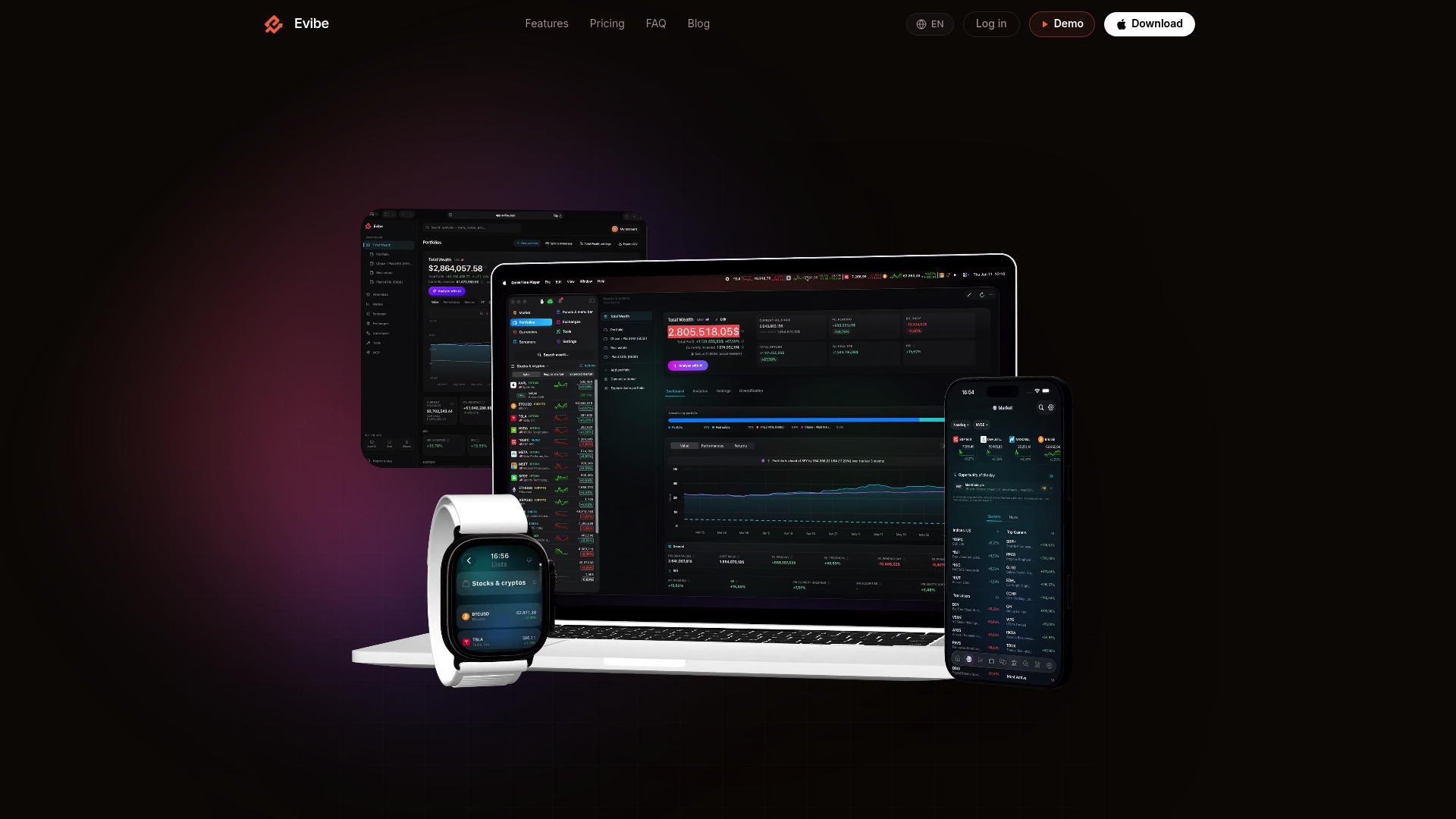
Evibe covers stocks, ETFs, options, crypto, real estate, art, vehicles, startups, collectibles, and cash in one real-time dashboard. Automatic syncing handles your bank and brokerage accounts. Manual entry handles everything else. AI-driven analysis gives you a plain-language read on your risk and diversification without a sales call attached.
No ads. No data selling. No advisory upsell. Just a subscription that pays for a product that works.
If you want full asset coverage and a clean net worth picture without the pressure, track your entire net worth with Evibe today.
Useful sources and further reading
The following sources informed the comparisons, feature claims, and community signals in this article:
- Rob Berger — Empower Alternatives: Independent analysis of why true all-in-one replacements are rare and how to prioritize by primary need; also the source for community-reported connectivity issues and the advisory upsell model.
- SheetLink — Personal Capital Alternative: Vendor positioning for privacy-first, spreadsheet-centric workflows; useful for understanding the "no advisor calls" and data-ownership argument.
- WalletHacks — 5 Best Personal Capital Alternatives: Roundup mapping specialized tools to specific user needs, including asset tracking, budgeting, retirement planning, and robo-advisors.
- X1 Wealth — Best Empower Alternatives: Covers the high-end replacement category for complex households needing tax strategy and estate plan coordination.
- Portfolio Genius — Personal Capital Alternative: Vendor perspective on AI-driven portfolio analysis as a replacement for Empower's investment tools.
- Bogleheads Forum — Empower Alternatives Thread: Community discussion of real user experiences switching away from Personal Capital/Empower; useful for understanding practical tradeoffs.
- Reddit r/PersonalCapital — Alternatives Thread: User-driven recommendations and complaints that reflect real switching behavior and pain points.
- FINRA Investor Resources: Primary regulatory reference for verifying the registration status of investment advisors and robo-advisors mentioned in this article.