Best Snowball Analytics Alternative for Investors in 2026
Discover the best Snowball Analytics alternative for 2026 — enhance portfolio tracking, dividend income, tax reporting and insights tailored for investors.
Best Snowball Analytics Alternative for Investors in 2026

TL;DR:
- A Snowball Analytics alternative is a portfolio platform that matches or exceeds its support for multiple assets, dividend tracking, and advanced analytics. The best alternatives offer automatic broker syncing, comprehensive asset coverage, and detailed tax reports suitable for complex portfolios. Evibe provides a complete, AI-driven portfolio view, real-time alerts, and seamless account integration for diverse assets.
A Snowball Analytics alternative is any portfolio tracking platform that matches or exceeds Snowball's core capabilities, including multi-asset coverage, dividend calendar tracking, and financial analytics, while offering a different interface, pricing model, or depth of insight. Investors search for these alternatives when they hit account limits on free tiers, need stronger tax reporting, or want AI-powered forecasting that goes beyond what a standard snowball portfolio tracker provides. The right replacement depends on your asset mix, how many brokers you use, and whether you prioritize a mobile app or a web dashboard. Evibe is one platform built specifically to address these gaps.
What makes a strong Snowball Analytics alternative?
The best alternatives to Snowball Analytics share a clear set of capabilities that separate them from basic spreadsheet tools. Knowing what to look for saves you from switching platforms twice.
Multi-asset class support
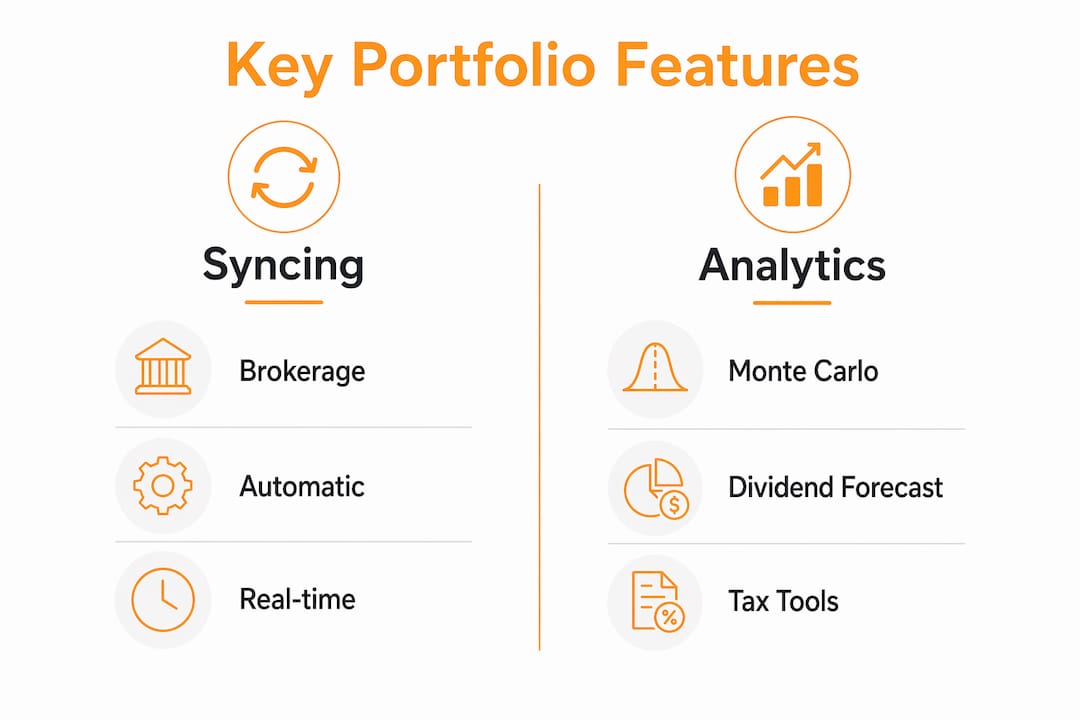
Your tracker must handle stocks, ETFs, options, crypto, real estate, and international holdings in a single view. Multi-currency support and broad exchange coverage are non-negotiable for any investor with global positions. Snowball Analytics itself offers web-based dashboards and multi-currency data for international portfolios, so any credible alternative must match that baseline.

Automatic brokerage syncing
Manual CSV imports are a maintenance burden. The strongest platforms sync directly with brokers and banks, pulling in transactions, dividends, and corporate actions automatically. This matters most when you hold accounts at multiple institutions and need a single, accurate picture of your net worth.
Analytics depth
Look for platforms that offer Monte Carlo projections, dividend income forecasting, and tax-loss harvesting tools. Enterprise-grade alternatives support multi-jurisdiction tax outputs and capital gains tracking, which is critical for investors with taxable and tax-advantaged accounts across different states.
Security and pricing transparency
Check whether the platform is SOC-certified and how it handles your brokerage credentials. Free tiers often cap holdings at 10, which leads to sunk-cost frustration after you spend time setting up your portfolio. Understand the pricing tiers before you commit.
Pro Tip: Before signing up, import a single small account and verify that cost-basis figures and corporate actions parse correctly. Catching errors early prevents hours of manual cleanup later.
What categories of alternatives exist for different investor types?
Investors have four broad categories to choose from, each with a distinct trade-off between power and simplicity.
-
Enterprise-grade platforms with tax reporting. These tools focus on compliant tax outputs, detailed historical performance data, and capital gains tracking across multiple jurisdictions. They suit professional investors and those with complex, multi-broker portfolios. The trade-off is cost and a steeper learning curve. Platforms in this category often carry SOC certification and support advisors managing client accounts.
-
Mobile-first apps with AI-powered insights. Mobile-first trackers excel at real-time sync and predictive analytics but may lack full-featured web dashboards. They suit investors who check their portfolio on the go and want proactive alerts rather than deep desktop analysis. Some platforms in this category include Monte Carlo simulation and AI-generated investment insights alongside dividend income forecasting.
-
DIY spreadsheet approaches. Spreadsheets are free and flexible, but live price formulas break frequently and demand constant manual fixes. This approach works for investors with simple portfolios and the patience to maintain formulas, but it scales poorly once you add options, crypto, or foreign holdings.
-
Platform ecosystems with multi-portfolio coverage. Some platforms are built around connecting multiple exchanges, brokerages, and asset classes under one login. They suit investors who hold crypto alongside traditional equities and need a unified view of cash flows, yield on cost, and FX rate exposure. These ecosystems often include a snowball dividend calendar and detailed payout tracking.
How do you overcome common portfolio tracker challenges?
Switching platforms is rarely painless. The most common problems are predictable, and most are avoidable with the right preparation.
Testing CSV imports early is the single most important step before a full migration. Import one small account first and confirm that the platform correctly reads your cost basis, handles stock splits, and accounts for dividend reinvestments. If those three data points are wrong, every performance metric downstream will be wrong too.
Account limit traps are the second major issue. Free tiers that cap holdings at 10 positions feel like fully functional products until you hit the wall. The account limit trap leads investors to feel stuck after investing significant setup effort, so the practical fix is to test the paid tier with a trial before committing your full portfolio data.
- Cost basis consistency. When you hold the same stock across multiple brokers, confirm the platform uses a consistent accounting method, whether FIFO, LIFO, or average cost, across all accounts.
- Corporate action handling. Mergers, spin-offs, and stock splits must be applied automatically. If the platform requires manual adjustments for every corporate action, the maintenance burden compounds quickly.
- Data accuracy across brokers. Pull a spot-check report after syncing all accounts. Compare the platform's reported gain/loss figures against your broker statements for at least three positions.
- Balancing simplicity and depth. If you only track a handful of ETFs, an enterprise-grade platform adds complexity without benefit. Match the tool's power to your actual portfolio complexity.
Pro Tip: Run a parallel check for at least two weeks after migrating. Keep your old tracker active and compare total portfolio value daily. Discrepancies above 0.5% usually point to a missing transaction or a corporate action that did not sync correctly.
How do you choose the right alternative based on your investing style?
The right platform depends on what you actually track and how you make decisions.
| Investor type | Priority feature | What to look for |
|---|---|---|
| Dividend-focused | Dividend calendar and forecasting | Executed, declared, and estimated dividend tracking with yield on cost |
| Tax-conscious | Compliant reporting | Multi-jurisdiction capital gains output, SOC-certified data handling |
| Mobile-first | Real-time sync and AI insights | On-device alerts, AI-powered analysis, predictive cash flow |
| Global investor | Exchange and currency coverage | Broad international exchange data, FX rate conversion, multi-currency dashboards |
| Options trader | Derivatives support | Options portfolio tracking with Greeks and expiration alerts |
Dividend-focused investors should prioritize platforms with a dedicated snowball dividend tracker view that shows executed, declared, and estimated payments in one calendar. Tax-conscious investors need platforms that generate Schedule D-compatible outputs or at least detailed lot-level reports. Mobile-first investors benefit most from apps that push alerts when a position moves against a threshold, rather than requiring them to log in and check manually.
Global investors face the most complex requirements. AI equity research tools can supplement a tracker by providing deeper fundamental analysis on international holdings that most portfolio apps do not cover natively. For investors managing options alongside equities, a dedicated options portfolio tracker that handles expiration dates and premium tracking is worth the added cost.
The learning curve matters too. A platform with 40 features you never use is not better than one with 10 features you use every day. Start with your three most important metrics, confirm the platform handles them well, and then evaluate secondary features.
Key Takeaways
The best Snowball Analytics alternative matches your portfolio complexity, asset classes, and preferred interface rather than simply offering the most features.
| Point | Details |
|---|---|
| Test before migrating | Import one small account first to verify cost basis and corporate action accuracy. |
| Match power to complexity | Enterprise-grade tools add value only when your portfolio actually requires multi-jurisdiction tax reporting. |
| Avoid account limit traps | Free tiers capped at 10 holdings are not fully functional products; test paid tiers before full migration. |
| Prioritize automatic syncing | Manual CSV maintenance compounds errors across multiple brokers and asset classes. |
| AI and mobile-first features | Real-time sync and predictive analytics suit active investors who need on-the-go portfolio visibility. |
What I have learned from switching portfolio trackers
Vincent here. I have tested more portfolio trackers than I care to count, and the pattern is always the same. Investors pick a platform based on the feature list, not the data model underneath. That is the wrong order of operations.
The first question to ask is not "does it have a dividend calendar?" It is "how does it handle a stock split on a position I bought in three separate lots across two brokers?" That question will tell you more about a platform's reliability than any marketing page.
The shift toward AI-powered insights is real and worth paying attention to. Platforms that surface AI-driven portfolio analysis are genuinely useful for spotting concentration risk you have been ignoring. But AI features built on top of bad data are worse than no AI at all. The data foundation has to be solid first.
My honest advice: give any new platform 30 days with a subset of your portfolio before you cancel your existing tracker. The cost of running two tools for a month is far lower than the cost of rebuilding your transaction history from scratch because the import failed silently.
— Vincent
Evibe tracks your entire portfolio in one place
Evibe is a portfolio tracking app built for investors who need a complete picture of their net worth across stocks, ETFs, options, crypto, and real estate. Accounts sync automatically from banks and brokerages, so there is no manual entry.
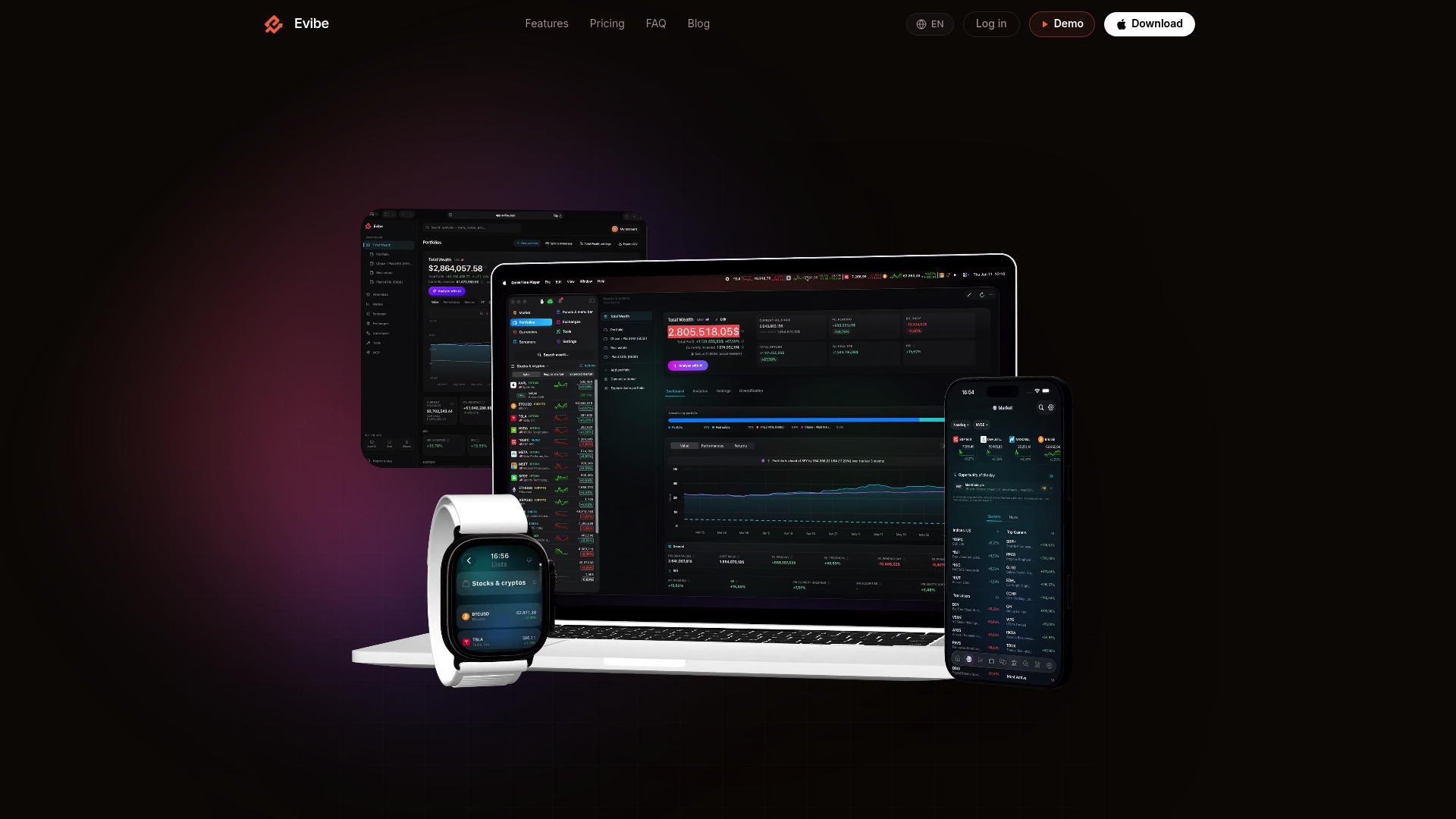
Evibe's AI-driven analysis flags concentration risk, tracks diversification, and benchmarks your performance against major indices. The dividend tracker shows executed, declared, and estimated payments in a single view, and the options module handles expiration tracking alongside your equity positions. Evibe runs on iPhone and Mac, with real-time alerts for market moves that matter to your specific holdings. If you are looking for a professional-grade Snowball Analytics comparison, Evibe is built for exactly that. Track your net worth in real time and see the full picture.
FAQ
What is a Snowball Analytics alternative?
A Snowball Analytics alternative is a portfolio tracking platform that offers comparable or stronger features, including multi-asset support, dividend tracking, and financial analytics, under a different pricing model or interface.
Is Snowball Analytics free?
Snowball Analytics offers a free tier, but free tiers typically cap holdings at a low number of positions, which limits their usefulness for investors with diversified portfolios.
What features should I prioritize in a portfolio tracker?
Prioritize automatic brokerage syncing, multi-asset class support, dividend income forecasting, and tax-compliant reporting. These four capabilities cover the needs of most serious investors.
How do I migrate from one portfolio tracker to another safely?
Start by importing one small account and verifying cost basis, dividend history, and corporate action data before moving your full portfolio. Run both platforms in parallel for at least two weeks to catch discrepancies.
Do mobile-first portfolio trackers work for complex portfolios?
Mobile-first trackers work well for real-time monitoring and alerts but may lack the deep reporting features that complex, multi-broker portfolios require. Evaluate whether the platform offers a web dashboard for detailed analysis alongside the mobile app.