Best Mint Alternative for Multi-Asset Investors (2026)
Discover the best Mint alternative for multi-asset investors in 2026 — Evibe offers universal asset tracking, private data storage, and Apple-native design.
Best Mint Alternative for Multi-Asset Investors (2026)

TL;DR:
- Evibe is a comprehensive portfolio tracker that covers various asset classes and offers both TWRR and MWRR performance metrics. It emphasizes data security, accurate historical FX rates, and easy data export, making it a superior Mint alternative for serious investors. Proper asset coverage and performance analysis are crucial for understanding true portfolio growth and contribution timing effects.
For U.S. investors who track more than a checking account, Evibe is the best Mint alternative available today. Mint was a budgeting app; Evibe is a portfolio tracker built for the full picture of your wealth.
Three reasons it stands out:
- Universal asset coverage. Stocks, ETFs, options, crypto, real estate, art, vehicles, startups, loans, collectibles, and cash all live in one dashboard, with automatic syncing for 1,000+ banks, brokerages and crypto exchanges across the US, Canada and Europe, plus manual entry for everything else.
- Performance math that actually means something. Evibe supports both time-weighted and money-weighted return perspectives, so you can separate how your assets performed from how your contribution timing affected your outcome.
- Secure sync, export, and migration. Bank-level encryption, multi-factor authentication (MFA), no data selling, and CSV export options mean your data stays yours and moves when you do.
The CFA Institute and GIPS recommend time-weighted methods for published performance results because TWRR neutralizes cash-flow effects. Evibe brings that institutional standard to individual investors.
Table of Contents
- What to look for in a Mint alternative for multi-asset portfolios
- How TWRR and MWRR measure your portfolio differently
- How to migrate from a legacy budgeting app to a portfolio tracker
- Why Evibe works well as a Mint alternative for U.S. investors
- How to choose the right Mint alternative for your investor profile
- Key Takeaways
- Why the performance metrics gap matters more than the app switch
- Evibe: portfolio tracking built for serious investors
- Sources and further reading
What to look for in a Mint alternative for multi-asset portfolios
The market has shifted toward privacy-focused, multi-currency, and AI-assisted solutions as investors move away from legacy free budgeting apps. No single free app replicates every feature investors actually need. Here is how to evaluate your options before committing.

| Feature | Must-Have | Nice-to-Have | Why It Matters |
|---|---|---|---|
| Asset coverage | Stocks, ETFs, crypto, real estate | Art, collectibles, startups | Incomplete coverage distorts your true net worth |
| Performance metrics | TWRR and MWRR/IRR | Sub-period attribution | Tells you whether returns come from selection or timing |
| Account sync | Automatic bank/brokerage links | OAuth with major custodians | Reduces manual error and keeps data current |
| Custom/manual entry | Private assets, real estate | Valuations via third-party APIs | Illiquid assets are often the largest holdings |
| Multi-currency & FX history | Historical rates for past trades | Real-time FX | Correct TWRR requires original-currency transactions |
| Tax & dividend reporting | Exportable reports, dividend history | Estimated tax lot tracking | Reduces audit friction at year-end |
| Options & derivatives | Greeks, expiry calendar | P&L by strategy | Active traders need position-level detail |
| API & data export | CSV export, data portability | REST API for AI assistants | Prevents lock-in and supports backup workflows |
| Security | Encryption, MFA, no data selling | SOC 2 certification | Non-negotiable for linked financial accounts |
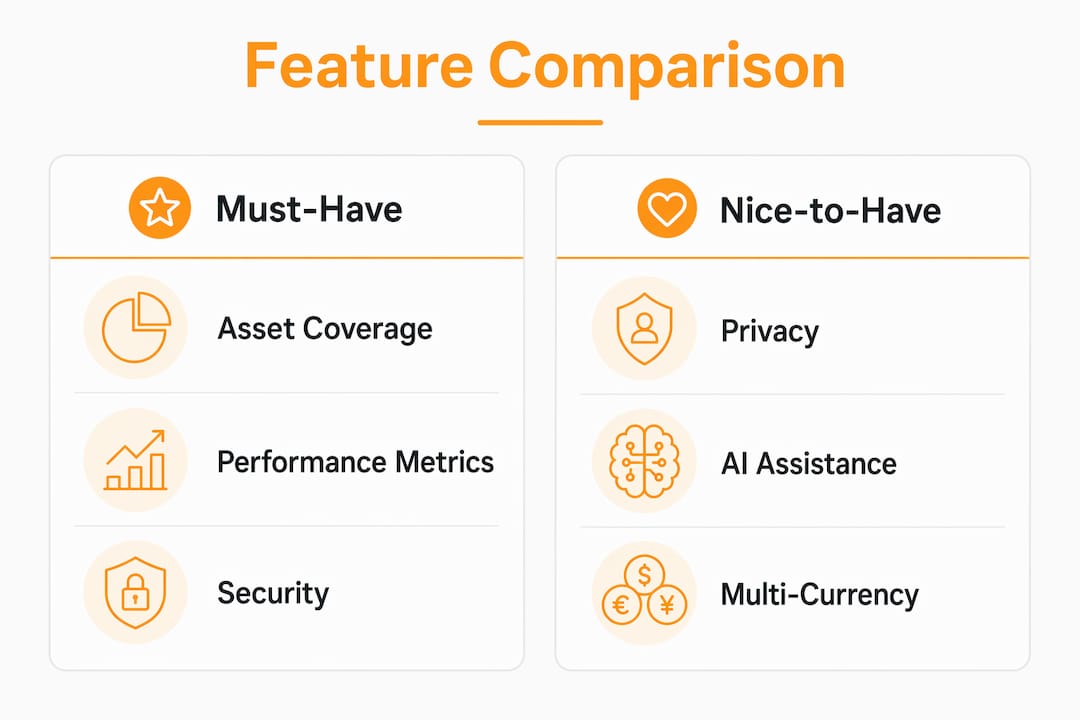
Pro Tip: Start your evaluation with three questions: Does it cover every asset class you own? Does it calculate both TWRR and MWRR? Can you export your data at any time? If any answer is no, keep looking.
How TWRR and MWRR measure your portfolio differently
These two metrics answer different questions, and confusing them is one of the most common mistakes individual investors make.
Time-weighted rate of return (TWRR) measures the growth of a single unit of currency and strips out the effects of external cash flows, making it the standard for comparing manager or asset performance across portfolios. Money-weighted rate of return (MWRR) is equivalent to the internal rate of return (IRR) and incorporates the size and timing of your contributions and withdrawals, reflecting your actual investor experience.
Here is where they diverge in practice. Suppose your portfolio gains 10% in Q1. You then deposit a large sum right before Q2, which drops 8%. TWRR reports the asset performance across both periods without penalizing you for the deposit timing. Your MWRR, however, takes a harder hit because more capital was exposed to the Q2 decline. Large contributions before market declines can materially reduce MWRR even when the underlying asset selection was sound, which is a common source of investor frustration.
When the two metrics diverge, that gap tells you something useful. A wide gap signals that your contribution timing, not your asset picks, is driving the difference. If a portfolio has zero cash flows during a period, TWRR and MWRR produce identical results; the divergence only appears when money moves in or out.
- Use TWRR to evaluate whether your fund choices or asset allocation are working, and to compare against index benchmarks.
- Use MWRR for personal financial planning, goal-tracking, and understanding how your actual cash flows affected wealth growth.
- Track both side-by-side after any major deposit or withdrawal to separate timing effects from selection effects.
Pro Tip: Run your MWRR quarterly for your household account. A persistent gap between MWRR and TWRR over multiple quarters is a signal to review your contribution schedule, not necessarily your asset picks.
How to migrate from a legacy budgeting app to a portfolio tracker
Migration takes less than a day when you follow a structured sequence. Rushing it creates duplicate transactions and missing historical prices.
- Export your data first. Download transaction CSVs, holdings snapshots, and any category or tag mappings from your current app before closing the account.
- Gather account credentials. Collect login details for every bank and brokerage you want to sync automatically. For private assets (real estate, startups, collectibles), pull the most recent statement or appraisal document.
- Run a pilot import. Import one account or a 90-day transaction window first. Verify the opening balance matches your statement before importing everything.
- Enable automatic sync. Once balances reconcile, connect remaining accounts for live syncing. Most major U.S. custodians support direct links.
- Reconcile net worth and run a performance check. Compare your imported net worth against your last statement total. Then run both TWRR and MWRR for the imported period to confirm the math is clean.
- Set up export schedules. Configure regular CSV or data exports as a backup habit from day one.
Watch for these common pitfalls:
- Category mapping mismatches. Budgeting apps use spending categories; portfolio trackers use asset classes. Map manually rather than relying on auto-import labels.
- FX history loss. If you hold foreign securities, confirm the new tool preserves original-currency transaction data and applies historical rates correctly. In a multi-currency portfolio, correct historical FX application is crucial for accurate TWRR and MWRR.
- Duplicate transactions. Overlapping import windows create doubles. Import each period once and verify row counts.
- Missing prices for illiquid assets. Store original statement snapshots alongside manually priced positions and document your valuation method (cost basis, latest funding round, third-party appraisal).
Why Evibe works well as a Mint alternative for U.S. investors
Evibe was built for investors who outgrew budgeting apps. The feature set maps directly to what multi-asset investors need.
| Dimension | Evibe |
|---|---|
| Best for | Investors tracking diversified portfolios across public and private asset classes |
| Asset coverage | Stocks, ETFs, options, crypto, real estate, art, vehicles, startups, loans, collectibles, cash |
| Account syncing | Automatic sync for 1,000+ banks, brokerages and crypto exchanges across the US, Canada and Europe; manual entry for custom assets |
| Performance metrics | TWRR and MWRR/IRR supported at portfolio level |
| Security & privacy | Bank-level encryption, MFA, no data selling, no ads |
| Pricing & trial | Free plan; Premium via Apple App Store (monthly or annual), 7 days of Premium on every new account |
| Mobile app & alerts | iOS app with smart alerts for market changes and portfolio events |
| AI analytics | AI-driven risk, diversification, and performance analysis; API endpoints for ChatGPT, Claude, Gemini |
| Tax & dividend tracking | Advanced dividend tracking with executed, declared, and estimated views; exportable reports |
| Custom asset support | Full manual entry with multi-currency support and historical FX rates |
Key benefits for your portfolio:
- Accurate net worth. Every asset class included means no blind spots in your total wealth picture.
- Correct performance math. Both TWRR and MWRR calculated at the portfolio level, not just account by account.
- Cross-asset allocation analysis. AI insights flag concentration risk and diversification gaps across all holdings.
- Tax-ready exports. Dividend history and transaction data export cleanly for year-end reporting.
One honest caveat: Evibe's advanced features sit behind a Premium subscription. If your only goal is basic expense tracking, a simpler budgeting app may be sufficient. For investors who need portfolio-level performance math and multi-asset coverage, the subscription pays for itself in clarity.
How to choose the right Mint alternative for your investor profile
Your ideal tool depends on what you actually track and what decisions you need it to support.
- Passive long-term investor. Prioritize automatic account sync, multi-currency support, and clean tax exports. Performance metrics matter, but you check them quarterly, not daily.
- Active trader. Options tracking with Greeks, expiry calendars, and P&L by strategy are non-negotiable. You also need real-time alerts and benchmark comparisons.
- Real estate and private investor. Manual entry with flexible valuation methods (cost, appraisal, latest round) and the ability to store supporting documents alongside positions.
- Dividend-focused investor. Look for executed, declared, and estimated dividend views, yield on cost tracking, and exportable income reports for tax purposes.
Before signing up for any tool, ask these questions:
- Does it support every asset class I currently own?
- Does it calculate both TWRR and MWRR, or only one?
- Can I export all my data at any time, in a portable format?
- Is there a demo or pilot import before I commit to a subscription?
- What is the data retention and privacy policy?
The trade-off to weigh is price versus data portability versus feature depth. A free tool that locks your data or omits private assets will cost you more in manual workarounds than a paid subscription that covers everything.
Key Takeaways
For U.S. investors tracking diversified portfolios, Evibe is the strongest Mint alternative because it combines universal asset coverage, institutional-grade performance metrics (TWRR and MWRR), and a secure, exportable data model in one app.
| Point | Details |
|---|---|
| TWRR vs MWRR both matter | TWRR measures asset performance; MWRR reflects your actual investor experience including cash flow timing. |
| Migration requires a pilot step | Import one account first, verify balances, then expand to full sync to avoid duplicate transactions. |
| Multi-currency FX history is critical | Correct historical FX rates are required for accurate TWRR and MWRR in cross-border portfolios. |
| Honest caveat on pricing | Evibe is free to use, but its advanced features need Premium; best suited to investors who need portfolio-level analytics, not basic budgeting. |
| Evibe recommendation | Evibe covers all major asset classes, supports both performance metrics, and keeps your data exportable and private. |
Why the performance metrics gap matters more than the app switch
Most articles about Mint alternatives focus on which app looks most like Mint. That framing misses the real problem. Mint was a budgeting tool. What most investors actually need is a portfolio tracker with honest performance math.
Analysts emphasize that TWRR and MWRR are complementary metrics, not competing ones. MWRR tells you how your wealth-building decisions played out in practice. TWRR tells you whether your asset selection was any good. Running only one of them leaves you with half the picture. An investor who sees strong TWRR but weak MWRR knows the assets worked; the contribution timing did not. That is a very different problem to fix than poor asset selection.
The tools that matter are the ones that surface this distinction clearly, without requiring you to export to a spreadsheet and calculate it yourself. That is the standard worth holding any Mint replacement to.
Evibe: portfolio tracking built for serious investors
Mint tracked your spending. Evibe tracks your wealth. For investors managing stocks, ETFs, crypto, real estate, and private assets in one place, Evibe delivers automatic account syncing, AI-driven risk and diversification analysis, and both TWRR and MWRR at the portfolio level.
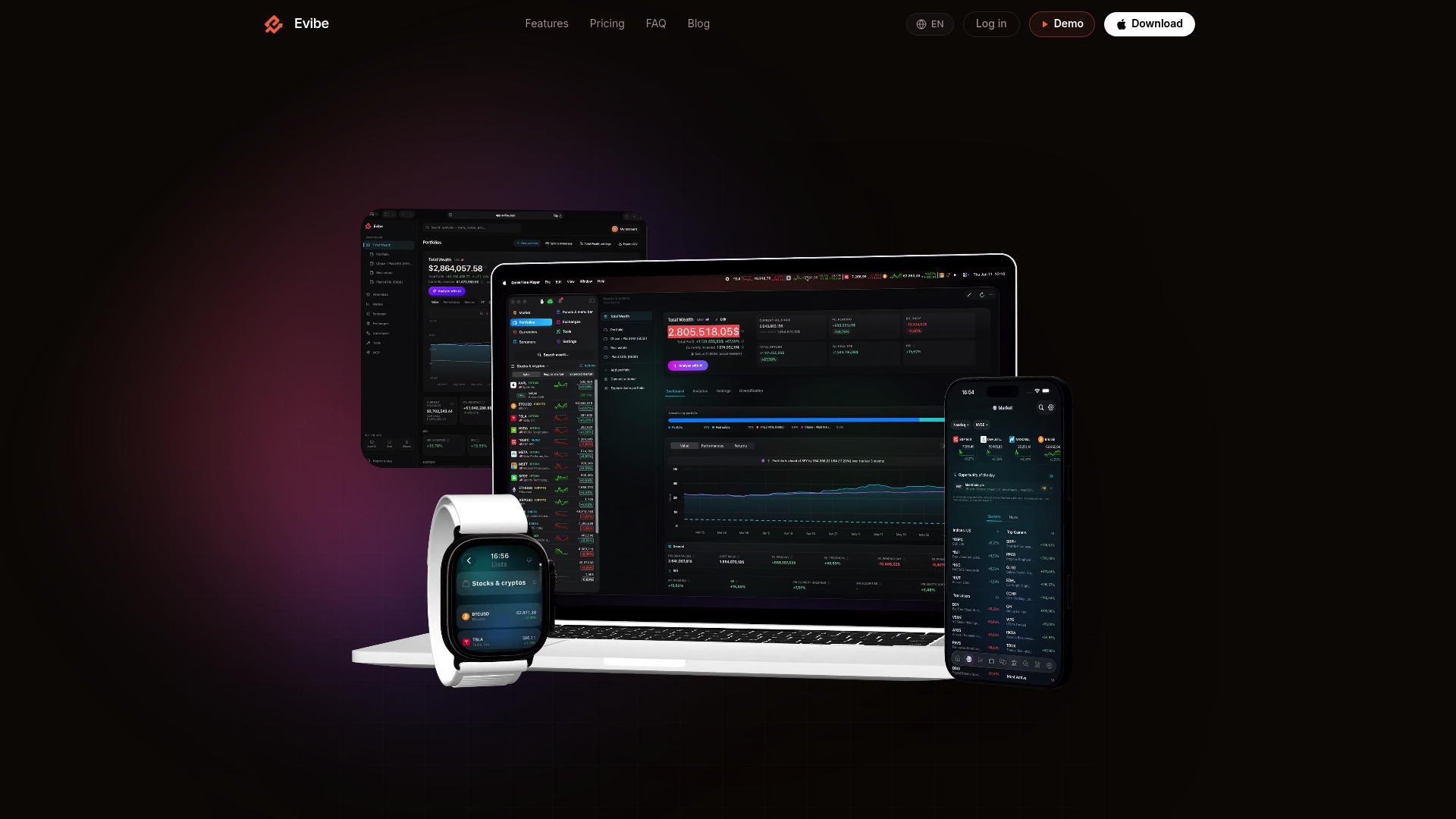
No ads. No data selling. Your financial data stays private, encrypted, and exportable on your schedule. The subscription is managed through the Apple App Store, with monthly and annual options.
Track your entire net worth in real time and run your first TWRR vs MWRR comparison on your imported portfolio today.
Sources and further reading
- Time-weighted return vs money-weighted rate of return — Aleta
- Money-weighted vs time-weighted returns — CFA-level guide
- TWR vs MWR — Ryan O'Connell Finance
- From factsheet to reality — PortfolioMetrix
- Time-weighted vs money-weighted — Investor's Edge (CIBC)
- Understand MWRR — Investopedia
- Evibe investing glossary (TWRR, MWRR, IRR)
- Evibe dividend tracker
- Best multi-currency portfolio tracker — Evibe