Top 5 Sharesight Review Alternatives 2026
Explore the top 5 Sharesight review alternatives for 2026 and discover the best portfolio tracking software to manage your investments privately and securely.
Top 5 Sharesight Review Alternatives 2026

Consolidating global assets, bank accounts, and alternative holdings in one real-time portfolio tracker often creates gaps and duplicates across services. Many platforms restrict asset class support, lock automatic imports behind paywalls, or require time-consuming manual data entry from unsupported brokers. This comparison covers pricing, bank connection, asset coverage, and analysis depth so investors can choose software that matches their entire portfolio without feature regret.
Table of Contents
Evibe
At a Glance
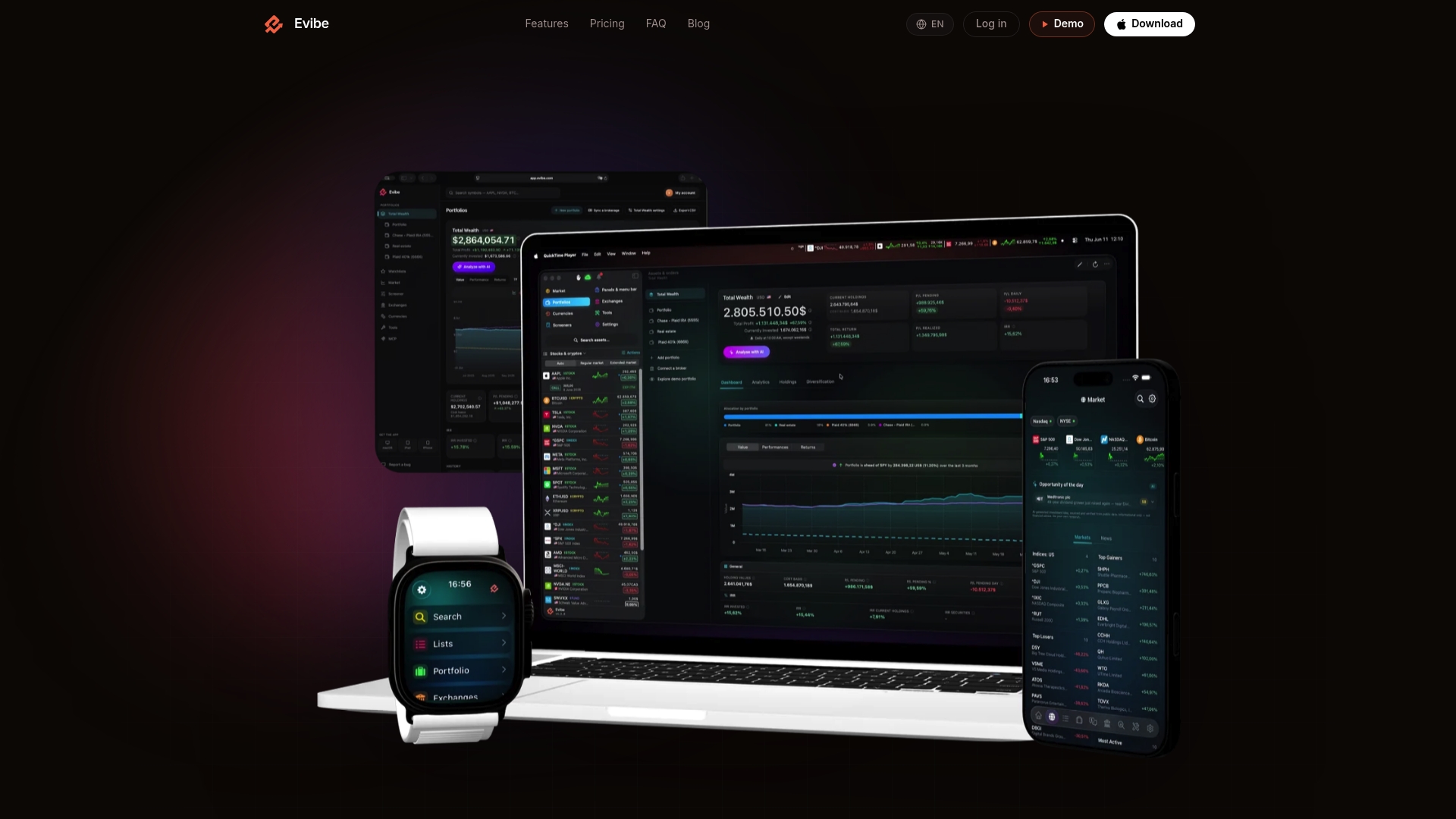
Native Apple apps deliver real-time streaming quotes and AI driven analysis across stocks, ETFs, crypto, real estate, art, and private holdings. Evibe also shows projected, declared, and paid dividends in a dedicated calendar. The app syncs bank and brokerage accounts for automatic holdings import across iPhone, iPad, Mac, and Apple Watch.
Core Features
Evibe offers read-only broker sync with 1,000+ banks and brokers so you do not type positions manually. It provides AI driven analysis that explains portfolio risk, allocation, and individual stock notes in plain language. The app supports multi currency support with historical FX rates, a dividend calendar, widgets, menu bar tickers, and Apple Watch complications.
Key Differentiator
Evibe centers on native Apple ecosystem integration paired with broad multi asset coverage and live updates. That combination places portfolio telemetrics on devices you use every day, from the menu bar to wrist. The result is constant visibility into net worth and cash flows without juggling separate services.
Pros
Evibe consolidates holdings that span traditional securities, crypto, real estate, and collectibles into one synchronized view. Real time data and device integrations keep you aware of price moves, earnings, and dividend events wherever you work. Multi currency support with historical FX rates improves performance accuracy when your portfolio contains non US assets.
Cons
- Evibe does not execute trades or place orders, so you must trade through your broker.
Notable Integrations
- Read-only broker sync for bank and brokerage connectivity across the US, Canada, Europe and crypto exchanges
Who It's For
Evibe fits Apple users who manage diversified portfolios and want live tracking rather than trading. It appeals to dividend investors who use a calendar to plan income. It also helps investors who need accurate performance across currencies and private assets.
Unique Value Proposition
Native apps with widgets, a Mac menu bar ticker, and Apple Watch complications put portfolio telemetry into daily device routines. That presence shortens the gap between market events and your response. Combined with AI driven plain language insights, Evibe reduces the time you spend assembling performance and risk summaries manually.
Real World Use Case
An investor links brokerage accounts, bank cash, rental real estate, and an art collection to Evibe. The app imports holdings through broker sync and normalizes values across currencies. The investor checks the Apple Watch for overnight moves, reviews AI notes on allocation, and adjusts future income planning using the dividend calendar.
Pricing
Evibe is free to use (1 portfolio up to 50 holdings, 1 watchlist, real-time prices, AI statement import), with Premium at $9.99/month or $99.99/year for unlimited portfolios, broker sync, AI analysis and the full history. Every new account gets 7 days of Premium, no card required.
Website: https://evibe.com
Kubera
At a Glance
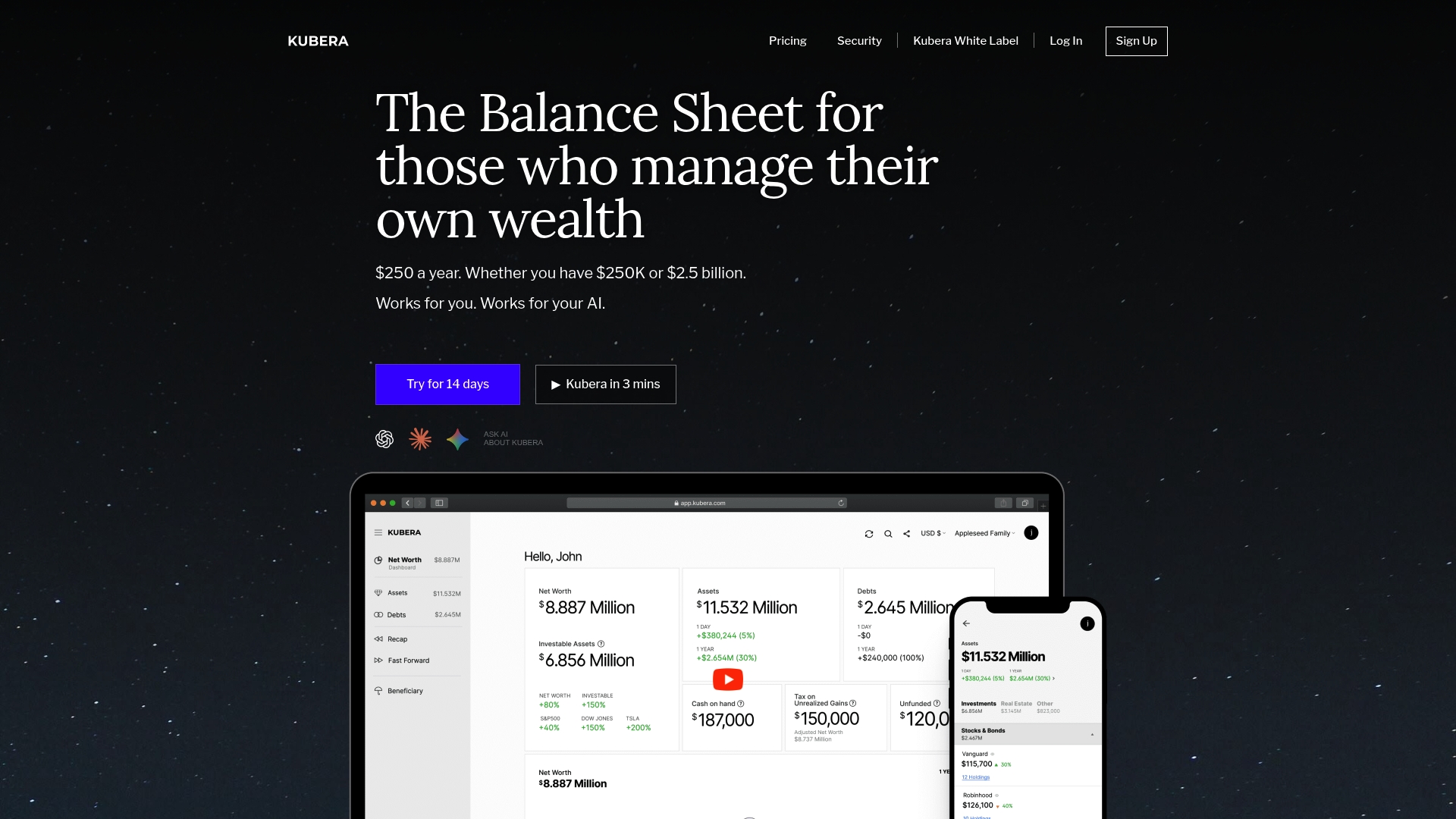
Kubera includes a Dead Man’s Switch for estate planning and a built-in proof of wealth verification feature. It supports NFTs, DeFi positions, and traditional holdings in one registry. That mix targets families and advisors who need cross border clarity and estate readiness.
Core Features
Kubera aggregates bank, brokerage, crypto, NFT, real estate, and private asset records into a single dashboard and keeps multi currency values updated. The platform offers AI powered asset appraisal, cash management forecasts, and a Fast Forward scenario planner for liquidity and tax planning. It also supports nested portfolios, entity ownership, permissioned sharing, and white label options for advisers.
Key Differentiator
Kubera’s strength is wide connectivity to global financial institutions combined with explicit support for multi currency portfolios and nested ownership structures. That pairing makes it easier to report consolidated net worth across countries and legal entities. Firms that need ownership level detail will find that capability central.
Pros
Kubera tracks a broad set of asset classes from exchange accounts to jewelry and vehicles, so the picture of family wealth is complete. Its support for crypto, NFTs, and DeFi alongside traditional holdings reduces the need for separate trackers. Collaboration features and permission controls let family members and advisors share reports without exporting spreadsheets, and real time reporting helps monitor liquidity and performance.
Cons
-
Website inconsistencies and dead links suggest some public documentation is out of date or incomplete. This creates friction when researching features.
-
Pricing is tiered by complexity and can be confusing for buyers who prefer simple, listed plans. That structure requires direct vendor conversations.
-
Several detailed feature pages return errors or are unavailable, which complicates self service setup and feature discovery.
When It May Not Fit
If you manage a single brokerage account and do not need entity level reporting, Kubera may be more complex than necessary. Buyers who want fully documented online help pages will find gaps in public resources. Small households on tight budgets may prefer a lower cost tracker with fewer advanced features.
Who It's For
High net worth individuals, cross border families, expats, and wealth advisers who need consolidated views across currencies and entities. It suits owners of private holdings and crypto who want a single authoritative registry for net worth and estate planning. Advisers offering white label reports will also find value.
Real World Use Case
A multi generational family holds rental properties in three countries, private equity, and several crypto wallets. They use Kubera to consolidate valuations, run cash flow forecasts, and grant an adviser read only access for quarterly reviews. The Dead Man’s Switch and proof of wealth features simplify succession and verification when an estate event occurs.
Pricing
Kubera lists $250/year for Essentials and $2,500/year for Black for complex needs with nested portfolios and VIP support. Enterprise white label plans start at $300/month for custom branding and deployment.
Website: https://kubera.com
Portseido
At a Glance
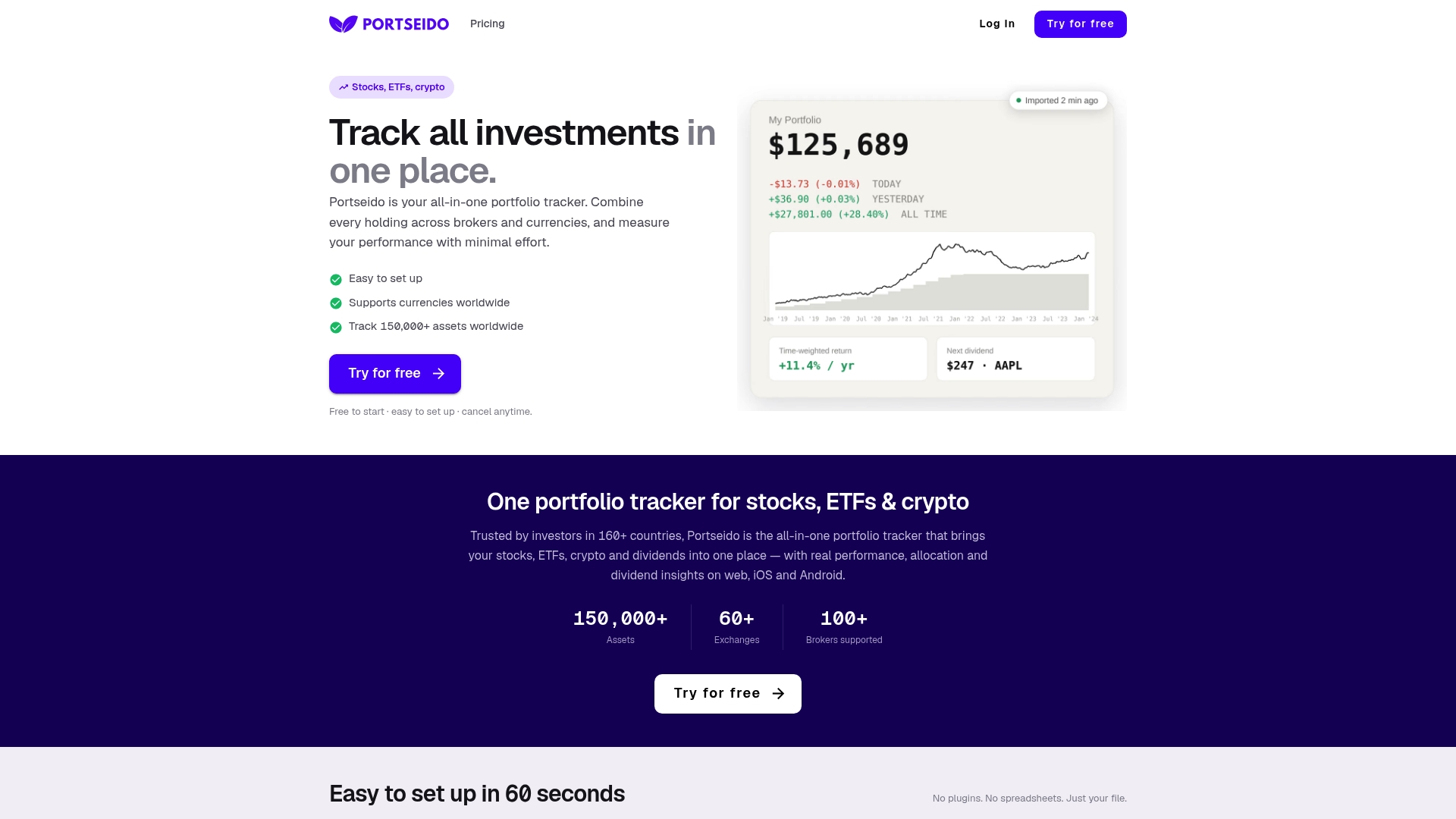
Portseido reports investors in over 160 countries. It consolidates stocks, ETFs, crypto, and dividend tracking across multiple currencies and exchanges. New users can try a free trial and manage portfolios from both web and mobile apps.
Core Features
Portseido tracks stocks, ETFs, cryptocurrencies, dividends, and other holdings while supporting multi currency and multi portfolio management. It imports trade data from major brokerages automatically and shows performance metrics such as growth, risk, and benchmarking. The product includes allocation analysis by industry, sector, and region plus portfolio visualization and a forward-looking dividend calendar with YoY growth and yield on cost.
Key Differentiator
Portseido focuses on automated trade and dividend import combined with wide global asset support. That workflow feeds deeper allocation and risk analytics than many single market trackers. The import emphasis suits investors who need accurate cash flow and dividend histories for income planning and performance measurement.
Pros
Portseido consolidates multiple asset classes and accounts into one view, which reduces manual reconciliation across brokerages. Its automated import and regular updates cut data entry for investors with accounts in different countries. Rich analytics include risk measures, allocation breakdowns, benchmarking, and a mobile app that keeps portfolios synced across devices.
Cons
- Free plan limited to 50 transactions and one portfolio.
- Plus starts at $8/month billed annually, which may be costly for casual investors.
- The interface can feel complex for beginners and requires a learning curve.
- Reliance on brokerage imports means some brokers still require manual CSV uploads.
When It May Not Fit
If you only hold a handful of positions and prefer a free tool, Portseido’s limits on the free tier may feel restrictive. If you want automatic bank account aggregation or a net worth view with banking data, this product focuses on investment accounts instead. Investors using a small regional broker not supported by Portseido will face manual data entry.
Who It's For
Active individual investors and traders who manage multiple portfolios across global markets will find Portseido useful. It fits investors who value precise imported trade histories and dividend cash flows for performance and income analysis. Casual investors with simple holdings may find the feature set more than they need.
Real World Use Case
A Europe based investor gathers trades from two brokerages and a crypto exchange into Portseido. They analyze allocation by sector, project dividend income, and compare portfolio returns to benchmarks to adjust holdings.
Pricing
Free plan available with limited transactions. Plus starts at $8/month billed annually and expands transaction limits. Pro starts at $12/month billed annually and unlocks unlimited portfolios and transactions.
Website: https://portseido.com
Strabo
At a Glance
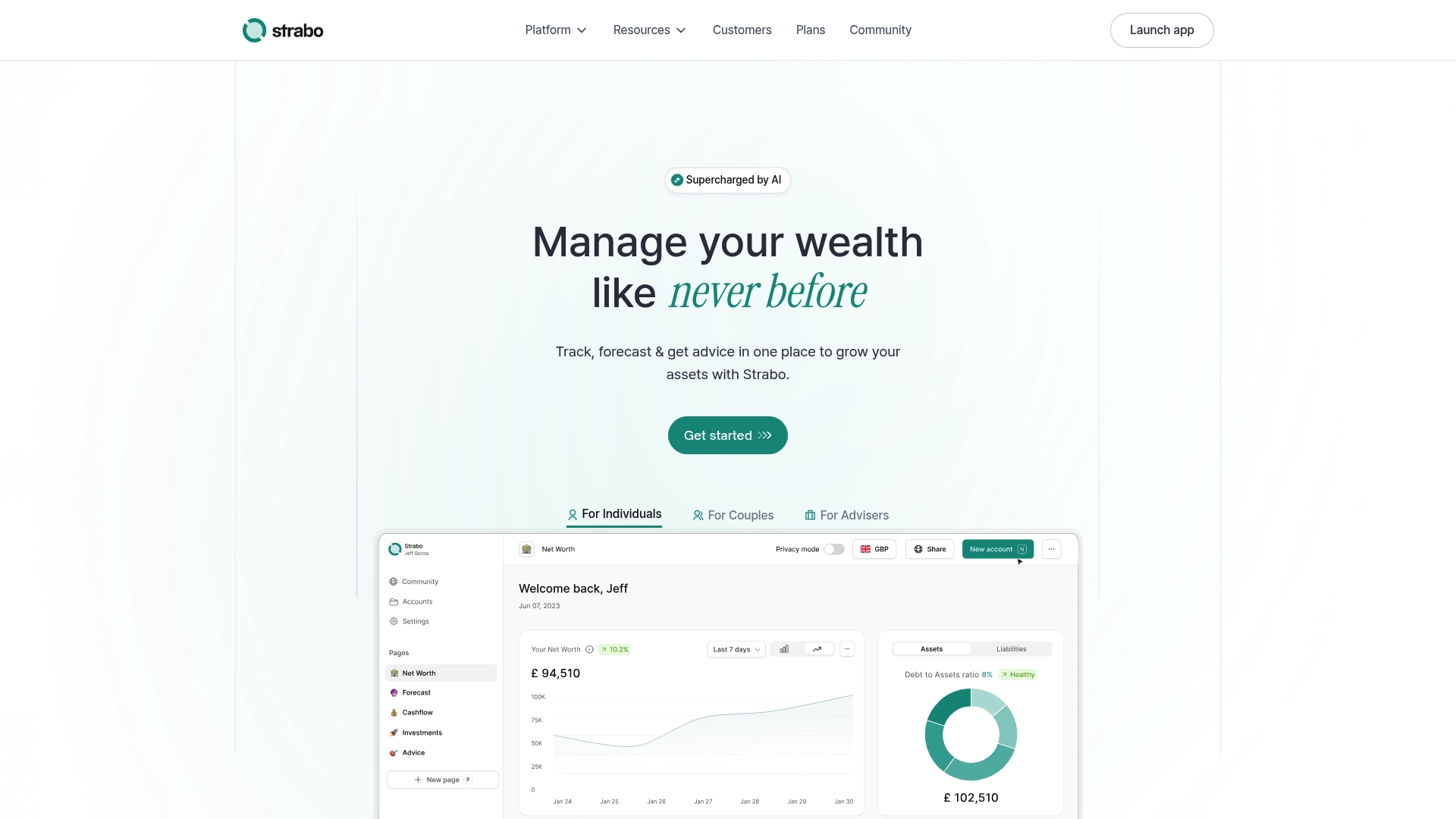
According to the company, Strabo aggregates account data from over 10,000 institutions. The platform pairs that breadth with strong privacy controls and an emphasis on AI powered forecasting. It targets both individual wealth owners and professional advisers who need multiasset visibility.
Core Features
Strabo supports account synchronization either by API connections or by manual entry, and it tracks assets across multiple currencies in 12 countries. The app lets you tag assets, build custom pages, and arrange widgets you can drag and drop for tailored views. It also includes AI driven reporting and forecasting tools for portfolio analysis and diversification insight.
Key Differentiator
Strabo’s standout element is its combination of advisor focused dashboards and embedded AI powered insights within the same workspace. That pairing lets advisers generate client reports and run scenario forecasts without exporting data to separate tools. The design emphasizes secure customization for multiaccount and cross border portfolios.
Pros
Strabo covers a wide set of asset classes, including listed securities, crypto holdings, property, and collectibles, which helps you see uncommon holdings alongside mainstream assets. Security features include AES 256 encryption and passwordless login, and the vendor highlights a cloud architecture and strict data privacy practices. Custom pages and widgets let advisers present focused reports. The built in AI assistant speeds routine analysis and report drafting.
Cons
- Early stage platform. Buyer feedback reports evolving features and intermittent bugs as the product matures.
- Pricing pressure for individual users. Paid tiers target advisers and may feel high for casual investors.
- Limited third party app integrations. The product prioritizes secure data links over a broad ecosystem of plug ins.
- API setup may require technical effort for teams wanting automated feeds.
When It May Not Fit
Strabo may not fit investors who want a lightweight, free tracker for a single brokerage account. Individuals on tight budgets will likely prefer cheaper or free solutions. Teams that need wide app interoperability may find the integration scope narrow, and organizations without IT support could struggle with API configuration.
Who It's For
Strabo suits financial advisers, wealth managers, and high net worth individuals who manage multiple accounts and cross border assets. It also fits advisers who need client ready reports and scenario forecasts inside one secure dashboard. Casual investors with a single account are a poor match.
Real World Use Case
A financial adviser uses Strabo to consolidate client holdings across brokerages and jurisdictions, then runs scenario forecasts for tax and currency risk. The adviser produces branded, AI assisted reports and shares them with clients to explain diversification and projected cash flows.
Pricing
The pricing is tiered with a Pro plan at £70/year for individual professionals and a higher Adviser plan at £1,170/year for practice level features. Paid plans include a 7-day free trial to test syncing and reporting before committing.
Website: https://strabo.app
Portfolio Dividend Tracker
At a Glance
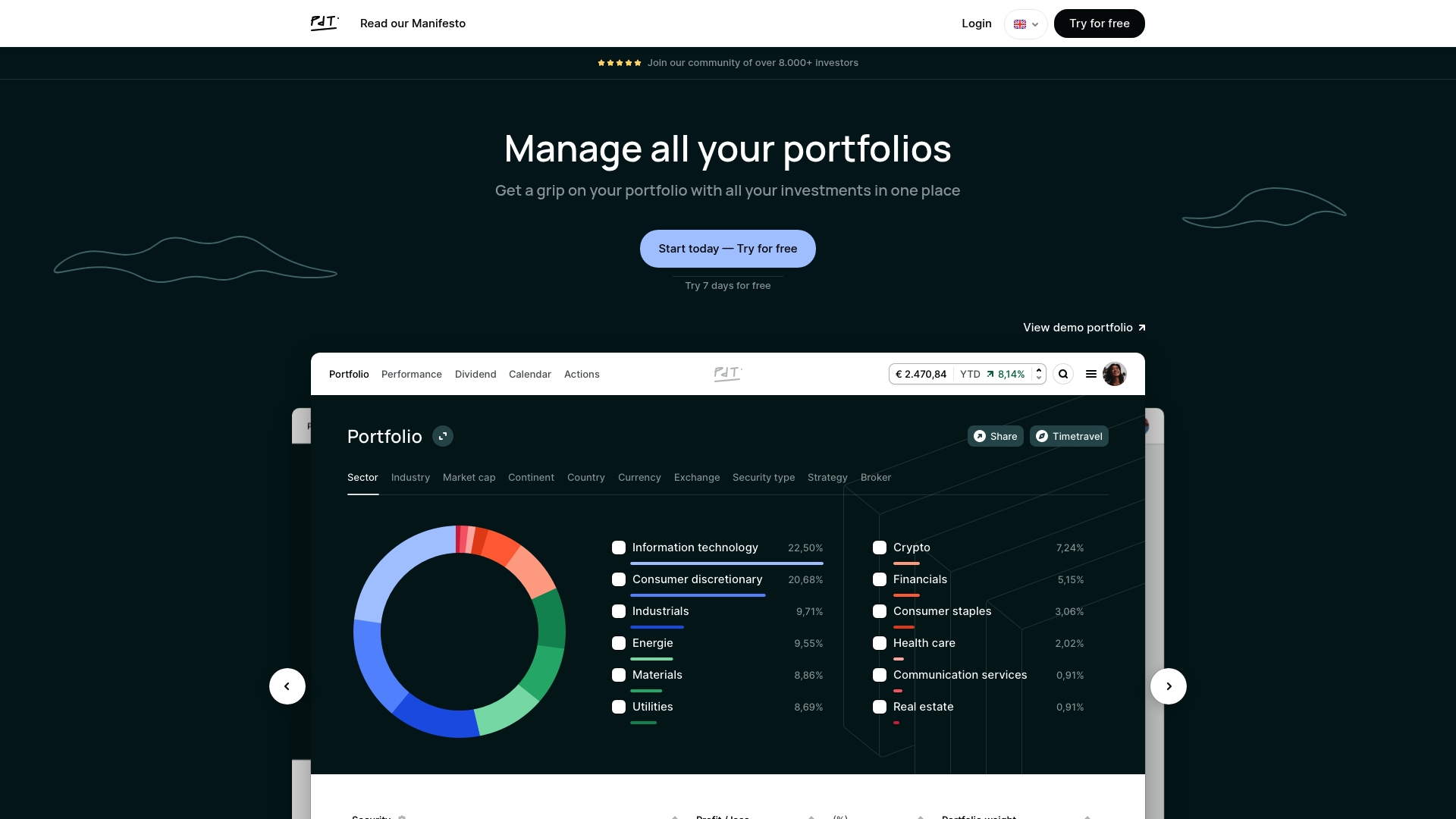
Portfolio Dividend Tracker reports coverage across more than 120 exchanges, which is unusually broad for a retail portfolio tool. It focuses on long term investors who need dividend tracking, portfolio simulation, and multibroker import. The product pairs data depth with community-led educational content.
Core Features
The app combines a consolidated portfolio overview with benchmark comparisons against indices like the S&P 500 and All World. It provides dividend tracking and growth analysis alongside diversification breakdowns by sector, industry, currency, and exchange. Users can import broker data such as Degiro and ABN Amro and run scenario planning using the timetravel simulation.
Key Differentiator
The defining feature is the time travel scenario planning tool, which lets you rewind a portfolio to past dates and project hypothetical future allocations. That feature turns historical performance into a planning input for yield and risk experiments. The simulation capability gives investors a way to stress test allocation changes before they act.
Pros
Portfolio Dividend Tracker delivers deep analytics and visualizations that go beyond what most brokers show. It supports multiple asset classes including stocks, ETFs, bonds, crypto, and precious metals, so you can view cross-asset correlations in one place. The community and educational content add practical context for dividend investors who prefer peer discussion and examples. The timetravel simulation and broker import reduce manual entry and help reconcile accounts from several providers.
Cons
- The interface can overwhelm absolute beginners. Learning the visualizations takes time for new investors.
- The level of data and options may be excessive for very casual users who only want a light tracker.
- The service is limited to a desktop web platform. No dedicated mobile app is listed.
When It May Not Fit
If you track a single account and want only simple balance updates, this tool is more complex than necessary. If you rely on on-the-go mobile workflows, the web-only access will feel restrictive. Budget-conscious users may find premium features locked behind the subscription model.
Who It's For
Long term individual investors managing multiple broker accounts who need in-depth dividend analysis and scenario planning. Investors allocating across global exchanges and several asset types will get the most value. People who prefer desktop analysis and community support will fit the product workflow.
Real World Use Case
A retail investor holds global stocks and ETFs across two brokers and wants to measure dividend yield on cost and forecast income. They import both broker histories, use timetravel to simulate topping up sectors, and compare results to the S&P 500 benchmark. The investor then uses community threads to validate assumptions about dividend sustainability.
Pricing
Plans start at €6.25 per month billed annually or €7.50 monthly, and a 7-day free trial is available. The model places premium features behind the paid plan while letting new users test the simulation tools before committing.
Website: https://portfoliodividendtracker.com
Comparison of alternatives
Evibe excels in integrating portfolio tracking within native Apple systems, presenting dividends and real-time data uniquely suited to device-centric workflows. Competing platforms offer specialized features that cater to targeted investor needs.
Estate Planning and Reporting
Kubera’s unique features such as the Dead Man’s Switch, proof of wealth verification, and nested portfolio management excel for users prioritizing detailed estate planning and cross-generational wealth clarity. This platform targets families and high-net-worth individuals who require global asset consolidation in a single authoritative registry.
Dividend Tracking and Scenario Planning
Portfolio Dividend Tracker excels in its dividend analysis capabilities, supported by tools like the Timetravel simulation, empowering long-term investors to experiment with allocation changes and forecast yield results. These features are particularly beneficial for established investors focused on income sustainability.
Best fit
- Apple users seeking an integrated approach to monitoring diversified portfolios will find Evibe’s ecosystem-focused design ideal.
- Families requiring detailed estate planning tools will benefit from Kubera's functionality for cross-border transparency and event readiness.
- Active traders relying on accurate dividend insights and historical benchmarking should consider Portfolio Dividend Tracker.
- Investors managing varied asset classes, including collectibles and crypto, will appreciate Strabo’s focus on secure reporting and forecasting.
Our pick
Evibe’s unique ability to integrate tracking functionality within the Apple ecosystem—for visibility across multiple device types—sets it apart for users centered on convenience and immediacy. However, investors with demands for advanced estate planning features or multi-generational wealth tools may find Kubera a more fitting choice.
Evibe offers seamless integration with Apple devices combined with real-time, multi-asset tracking capabilities, providing users with actionable insights.
| Product | Key Feature | Best For | Pricing | Limitation |
|---|---|---|---|---|
| Evibe | Real-time tracking and AI analysis of holdings | Apple users managing diverse portfolios | Free; Premium $9.99/month or $99.99/year | Does not execute trades directly |
| Kubera | Estate planning tools and global asset registry | High-net-worth families and advisors | $250/year Essentials tier | Limited online documentation |
| Portseido | Automated trade and dividend data import | Active investors tracking global portfolios | Free with limits; Plus $8/month | Free plan restricted to 50 transactions |
| Strabo | AI-powered dashboards for advisors | Wealth managers with cross-border accounts | Pro £70/year | Early-stage platform with limited integrations |
| Portfolio Dividend Tracker | Dividend analysis and simulation tools | Long-term investors managing multiple brokers | €6.25/month billed annually | Desktop web-only; no mobile app listed |
How to Overcome Sharesight Review Limitations with Evibe
Many investors find Sharesight review alternatives necessary when managing diverse holdings across multiple currencies and asset types. Challenges include manual data entry, limited real-time updates, and insufficient risk analysis. Evibe addresses these issues by syncing your bank and brokerage accounts automatically and delivering AI-driven insights on portfolio risk, allocation, and performance.
Evibe consolidates assets like stocks, crypto, real estate, and private holdings into a unified view across Apple devices. It offers a dividend calendar and live market quotes that keep dividend investors informed without juggling multiple services. This real-time visibility reduces your time spent on manual updates and helps you respond promptly to market moves.
If you manage diversified portfolios and want a clear, integrated picture of your net worth, visit Evibe. Connect your accounts and unlock detailed portfolio analysis in under a minute.
Learn more about Evibe and take control of your investments today.
FAQ
How does Evibe support portfolio tracking across multiple asset classes?
Evibe consolidates holdings that span traditional securities, crypto, real estate, and collectibles into one synchronized view. This capability allows you to monitor diverse investments in real time without juggling separate services. You can rely on Evibe for clear insights into your entire portfolio's performance.
What is the difference between Evibe and Portseido in terms of data import?
Portseido excels in automated trade and dividend import, allowing users to gather accurate cash flow and history from multiple sources effortlessly. In contrast, Evibe connects to your bank or brokerage for read-only account synchronization, letting you import holdings without manual entry. Choose Portseido if you need detailed historical data automatically; otherwise, Evibe offers a more user-friendly approach for portfolio visualization.
Which application offers a dividend calendar feature for income tracking?
Evibe includes a dedicated dividend calendar that shows projected, declared, and paid dividends clearly. This feature helps you manage cash flow effectively and plan for future income from investments. Consider leveraging this calendar to enhance your dividend tracking experience.
Can I use Evibe if I am interested in NFT portfolio management?
Evibe does not support NFTs as part of its asset tracking. It focuses primarily on traditional investments, crypto, real estate, and collectibles. If NFT management is a priority, consider exploring alternatives that offer dedicated support for that area.
How does Evibe's pricing compare to Kubera's for similar features?
Evibe is free to use, with Premium at $9.99 per month or $99.99 per year covering its full range of tools and integrations. Conversely, Kubera's pricing starts at $250 per year, targeting more complex user needs with additional features like nested portfolios. If budget-friendly, straightforward tracking is your aim, Evibe is likely the better option.